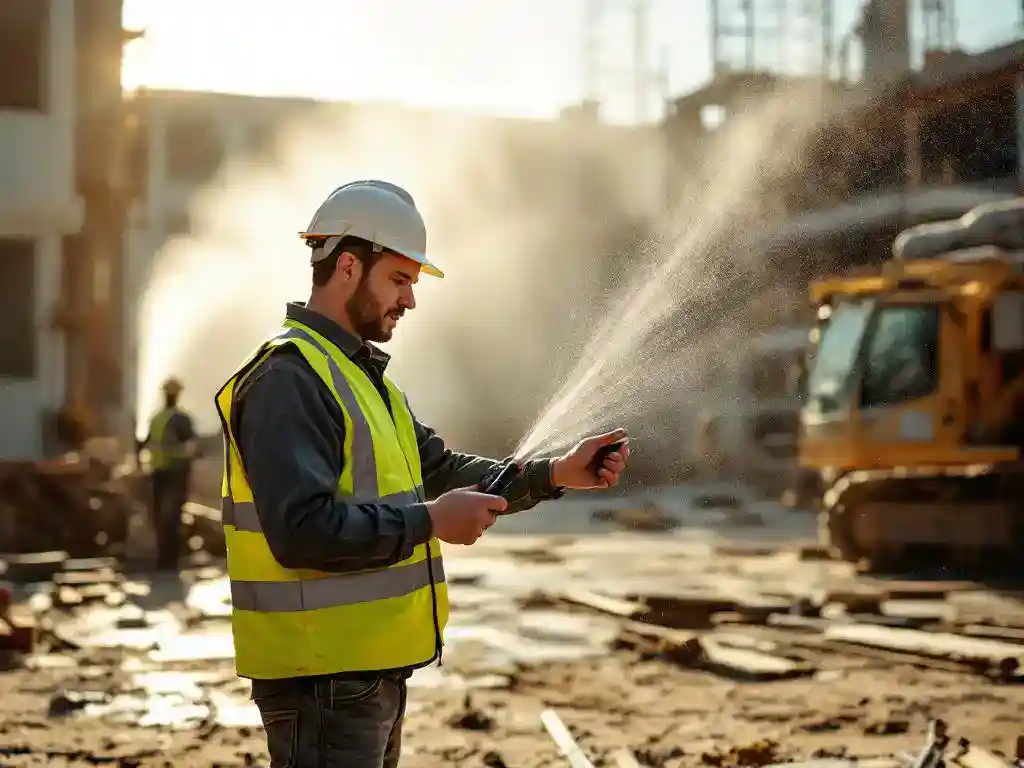
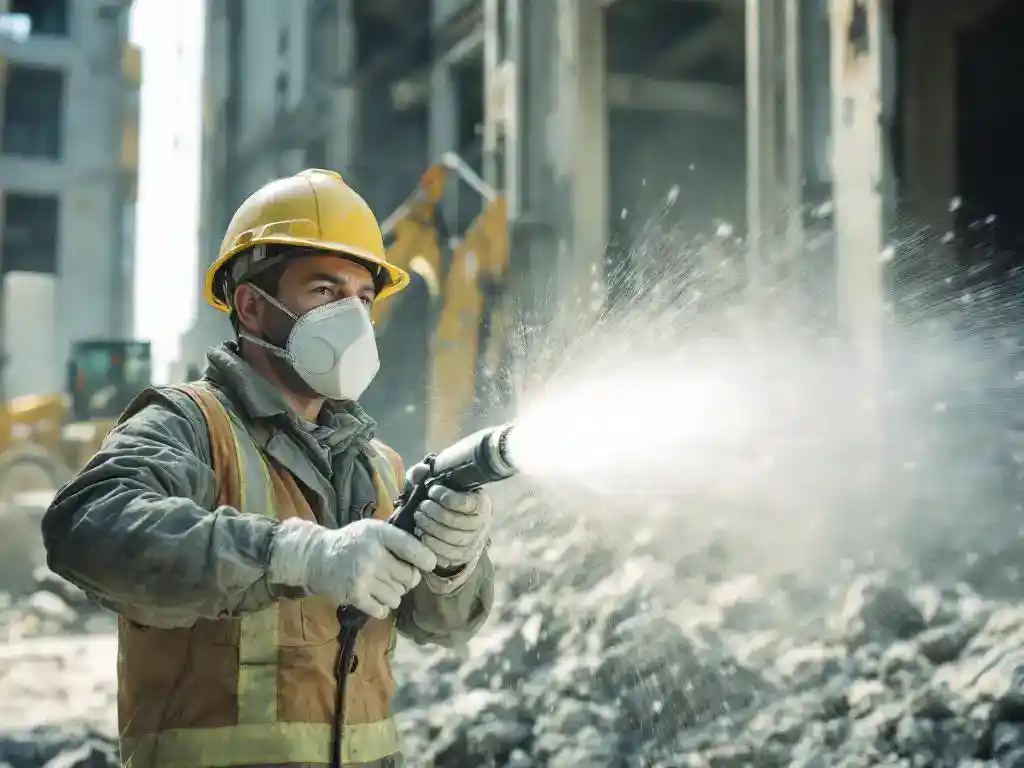
Dust on unpaved roads is caused by a combination of drought, wind, traffic and the loss of dry material. You can combat this using various methods, such as spraying water, deploying road sweepers or applying biodegradable additives. The best choice depends on your budget, traffic volume and environmental requirements. Modern dust control techniques for roads can reduce water consumption by 70–80 per cent, whilst being more effective than traditional methods.
Why does so much dust accumulate on unpaved roads?
Dust formation on unsealed roads is caused by a combination of dry soil particles, wind and mechanical disturbance from vehicles. When the moisture content in the road surface decreases, the fine particles become dislodged and can easily be stirred up by passing vehicles or the wind.
The main factors contributing to dust from unsealed roads are :
- Grain size of road surfacing material – Fine particles are blown away more quickly than coarser materials
- Moisture content – Dry roads produce more dust than damp surfaces
- Traffic intensity – More traffic means more mechanical disruption
- Weather conditions – Wind and drought exacerbate dust problems
- Loss of materials – Transport by lorry where the materials are not covered
Various industrial sectors face specific challenges when it comes to combating road dust. Construction sites, mining sites and logistics centres often have to deal with heavy vehicles on unpaved surfaces, which exacerbates the dust problem.
What methods are available to combat road dust?
There are various proven methods for controlling road dust, each with its own advantages and disadvantages. The choice depends on your specific situation, your budget and the desired sustainability of the solution.
Spraying water is the best-known, but also the least efficient, method. It offers temporary relief, but must be repeated constantly and consumes large quantities of water.
Binding agents, such as calcium chloride, which are hygroscopic, draw moisture from the air and keep the road damp for a longer period. They are effective and cost-effective, but carry environmental and corrosion risks.
Biodegradable additives improve the binding between dust particles without causing harm to the environment. These solutions are safe for people, animals and the environment.
Atomisation techniques use special additives that reduce the surface tension of water, enabling it to bind dust particles more effectively and keeping the surface damp for longer.
What are the costs of various dust control solutions?
The costs of dust control vary significantly depending on the method and situation. Spraying water may seem cheap, but it incurs high operational costs due to the need for constant repetition. Biodegradable solutions have higher initial costs, but lower total costs due to a longer duration of effectiveness and lower water consumption.
| Method | Initial costs | Operating costs | Duration |
|---|---|---|---|
| Water spraying | Low | High (daily) | 2–4 hours |
| Binding factors | Intermediate | Low | 1–2 weeks |
| Biodegradable additives | Medium-high | Low | 2–4 months |
| Misting | Intermediate | Intermediate | only during the activity |
Modern dust control methods can reduce water consumption by 70–80 per cent, whilst actually increasing effectiveness. This leads to significant long-term cost savings, particularly in areas where water is scarce or expensive.
When calculating the total costs, you must also take into account:
- Labour costs for implementation
- Environmental fines for non-compliance
- Health costs due to dust exposure
- Maintenance of vehicles and equipment
How do you choose the best dust control method for your situation?
The right choice for solving a substance-related problem depends on various factors that you must assess systematically. Start by analysing your specific situation and set priorities based on budget, environmental requirements and desired outcomes.
Decision criteria
The type of road and its use largely determine which method is suitable. Temporary construction roads have different requirements to permanent access roads to industrial facilities.
Traffic intensity affects the wear and tear on your chosen solution. Heavy traffic requires more robust methods that can withstand mechanical stress.
Weather conditions in your region play an important role. Areas with strong winds or extreme drought require a different approach to those with temperate climates.
Step-by-step selection
- Determine your budget for both the initial investment and the ongoing costs
- Assess the environmental requirements and regulations in your sector
- Analyse the specific characteristics of the road surface
- Consider the availability of water and other resources
- Test the chosen method on a small scale before implementing it on a large scale
For industrial dust control, it is important to choose methods that are not only effective but also comply with increasingly stringent environmental legislation and safety regulations.
How Wuvio helps tackle dust on unsealed roads
We offer complete solutions for the treatment of unsealed roads using biodegradable additives that are effective and environmentally friendly. Our RDS100+ technology slightly moistens road surfaces using hygroscopic additives, ensuring they remain damp for longer and produce less dust.
Our approach to road dust control comprises:
- Bespoke analysis of your specific road conditions and dust problem
- Laboratory testing of your road materials for optimal results
- Biodegradable solutions that are safe for people, animals and the environment
- Water savings of 70–80 per cent compared with traditional methods
- Long-lasting effect, resulting in less frequent re-treatment being required
- 24/7 support for consultancy and implementation
We develop all additives in our own laboratory, enabling us to respond quickly to your specific needs and changing regulations.
Would you like to know how our biodegradable dust control solution can solve your road dust problems? Read more about our expertise or contact us directly for a no-obligation analysis of your situation.
Related Articles
- How does dust pollution spread from a site into the surrounding area?
- When does dust nuisance become a problem for local residents?
- How do you set up a substance management programme for a recycling site?
- Dust control in biomass: what should you look out for?
- Which European directives apply to industrial dust emissions?