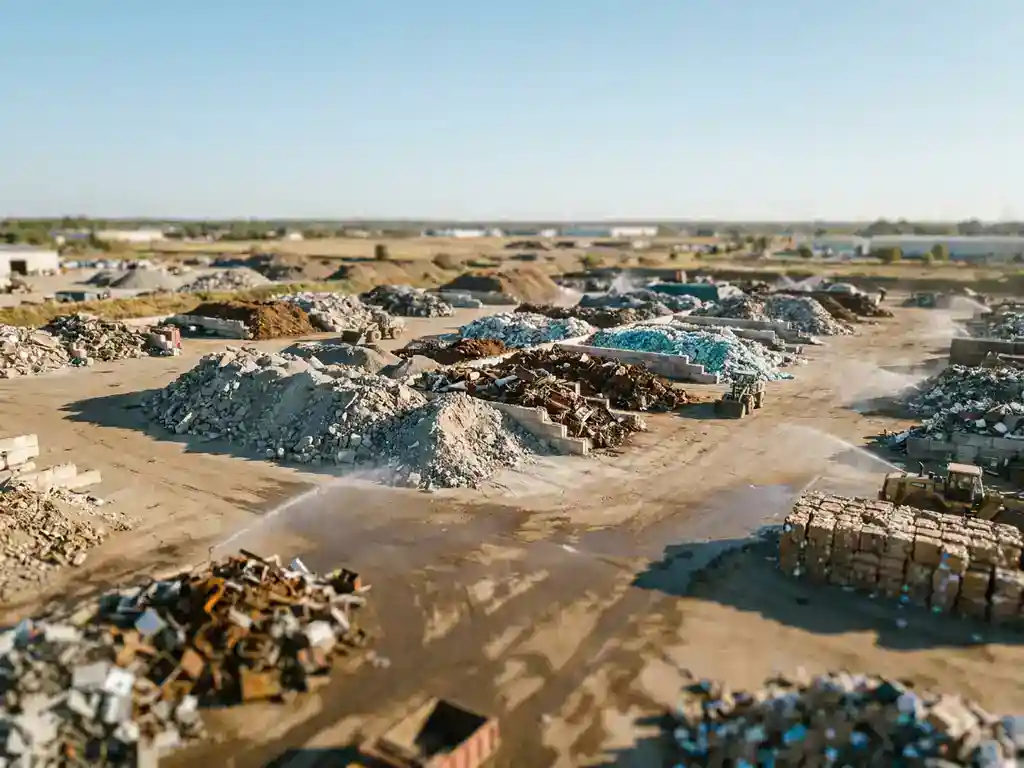
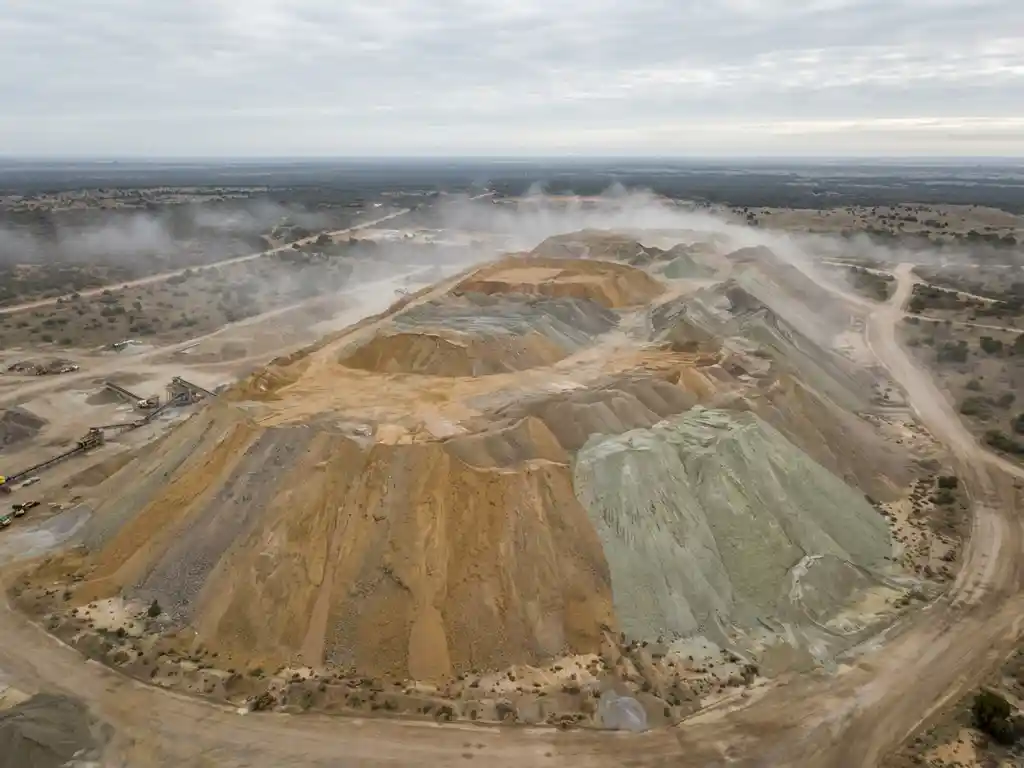
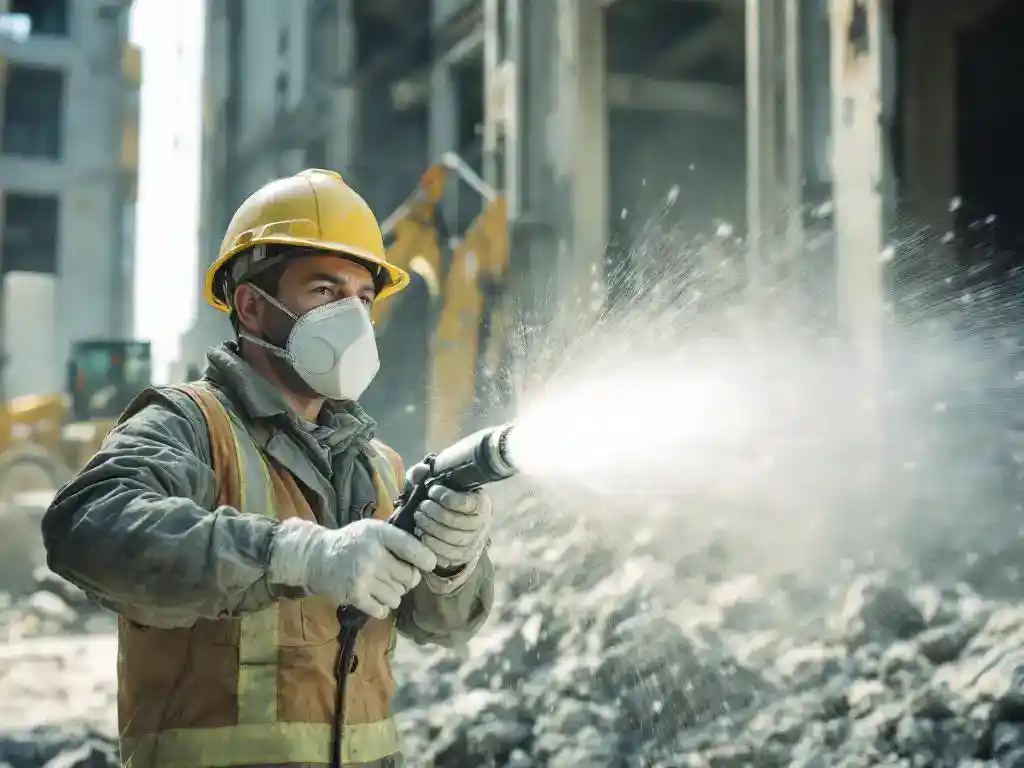
Dust blowing from a tip onto the road can be effectively controlled using various methods, such as crust formation, foam treatment or misting. The best approach depends on the material, the weather conditions and the location. Biodegradable additives are often the most sustainable solution and can reduce water consumption by 70–80 per cent compared with traditional methods. This guide answers the most important questions about dust emissions from stockpiles.
Why is dust blowing from a rubbish tip onto the road?
Dust dispersion is caused by a combination of wind speed, material type, moisture content and pile height. Dry, fine particles are easily picked up by the wind and dispersed to surrounding areas, such as roads. The problem is exacerbated when materials dry out due to sun and wind.
Different bulk materials exhibit different dust behaviour. Coal and ores produce a great deal of fine dust under dry conditions, whilst biomass and recycled materials often emit coarser dust that does not travel as far but does cause local nuisance. The problem is greatest in the case of:
- Wind speeds above 5 metres per second
- Low humidity (below 40 per cent)
- Tall stacks that are more exposed to the wind
- Materials with a moisture content below 10 per cent
The physical properties of the material largely determine how easily dust is blown away. Fine particles smaller than 100 micrometres are carried away even by a light breeze, whilst coarser particles require greater wind force to be set in motion.
What impact does dust dispersion have on your business?
Dust drift onto roads poses significant risks to your business. Slippery roads caused by dust fallout can lead to accidents, which may result in liability claims. Furthermore, dust nuisance leads to complaints from local residents and potentially legal action.
The practical implications are often more far-reaching than expected:
- Fines and penalties: Exceeding dust emission standards can result in fines of up to €450,000
- Production loss: Material that is blown away represents a direct loss of raw materials
- Reputational damage: Negative publicity affects your corporate image
- Operational disruptions: Forced production stoppages following complaints
Specific examples include situations where dust from coal storage facilities pollutes nearby motorways, or where recycled material from a sorting plant reaches residential areas. This leads not only to direct costs but also to protracted proceedings with local authorities and various industrial sectors that are imposing stricter requirements.
What are the most effective methods for preventing dust dispersion?
The most effective methods for preventing dust emission are crust formation, foam treatment and atomisation. Crust formation creates a protective layer over the material that binds dust particles and can reduce dust emissions by up to 90 per cent. This works extremely well for static storage, such as stockpiles.
Here is an overview of the various methods:
| Method | Effectiveness | Best use | Sustainability |
|---|---|---|---|
| Crusting | 90%+ reduction | Static piles | Biodegradable |
| Foam treatment | 80–90 per cent reduction | Active transition points | Environmentally friendly |
| Misting | 70–85 per cent reduction | Large surfaces | Water-saving |
| Water spraying | 40–60 per cent reduction | Temporary solution | High water consumption |
Foam treatment works well for dynamic processes, such as the loading and unloading of materials. The foam binds dust particles directly at the source, before they can be blown away. Atomisation creates a mist curtain around dust sources and is effective for large areas.
Traditional methods, such as covering with tarpaulins, may be practical, but are labour-intensive and not always feasible with active spoil heaps. Modern dust control solutions often deliver better results with less maintenance.
How do you choose the right pest control method for your situation?
Choosing the right method depends on specific factors, such as material type, weather conditions, location and budget. Crust formation is ideal for static stockpiles that remain in the same place for a longer period, whilst foam treatment works better for active transhipment processes.
Follow this step-by-step plan to determine the best approach:
- Analyse your material: Determine the particle size, moisture content and dust generation
- Assess the environment: Measure wind speed and consider the proximity of roads and sensitive locations
- Evaluate your process: Static storage or active transhipment determines the choice of methodology
- Set priorities: Balance sustainability, costs and ease of maintenance
Practical decision-making criteria include the size of the area to be treated, the frequency of material movement and local environmental regulations. If in doubt, a trial treatment using your own material is the best way to test effectiveness before investing in a full solution.
Sustainability requirements are becoming increasingly important. Biodegradable additives that reduce water consumption by 70–80 per cent often offer the best combination of effectiveness and environmental friendliness for long-term cost control.
How we help with dust dispersion from spoil heaps
We offer comprehensive dust control solutions that bind dust emissions directly at source using biodegradable additives. Our approach always begins with a laboratory test of your own material to determine the most effective method, followed by a trial treatment on site.
Our advantages regarding dust dispersion from stockpiles:
- Bespoke solutions: Every jumble requires a specific approach
- 70–80 per cent less water consumption compared with traditional methods
- Biodegradable additives that are 100% safe for people and the environment
- 24/7 support for acute substance-related problems
- In-house laboratory for continuous product optimisation
Dust control must be simple, effective and affordable. That is why we always start small with a test to prove that our solution works with your specific materials and conditions.
Would you like to know which method works best for your specific challenge? Read more about our expertise or contact us directly for a no-obligation analysis of your dust problem.
Related Articles
- What are the five ways to combat dust from port transport via conveyor belts?
- Can dust nuisance in biomass storage cause spontaneous combustion?
- How do you document dust control measures for a regulatory authority?
- What measurement techniques are associated with effective substance management?
- What role does dust control play in obtaining an environmental permit?