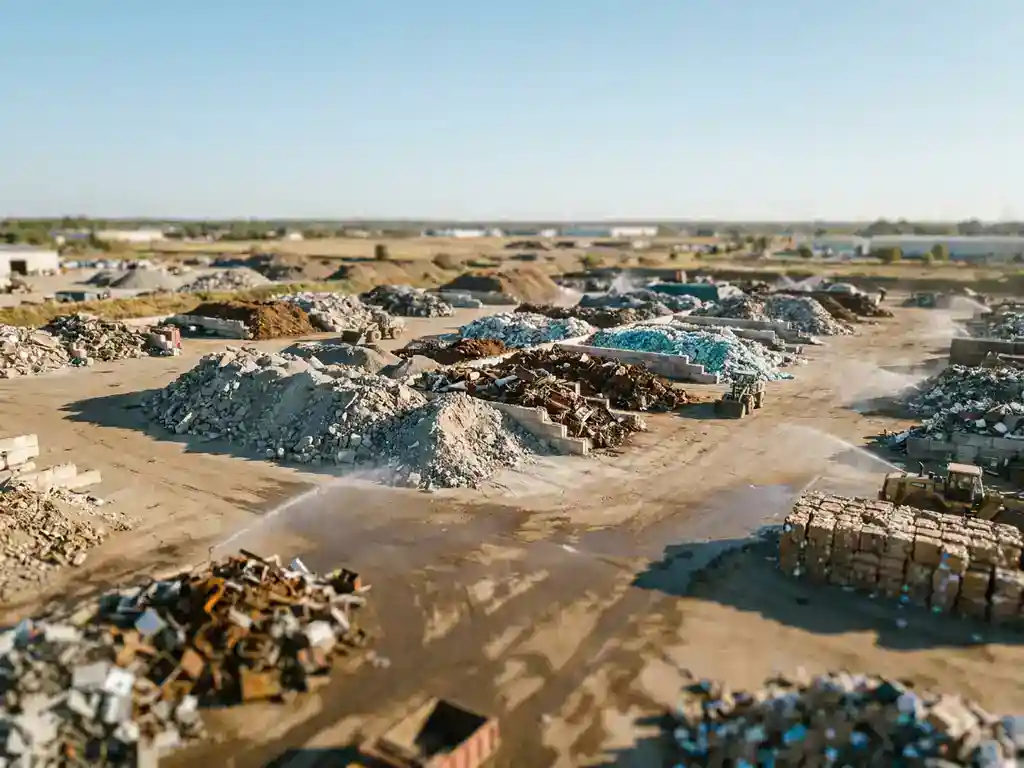
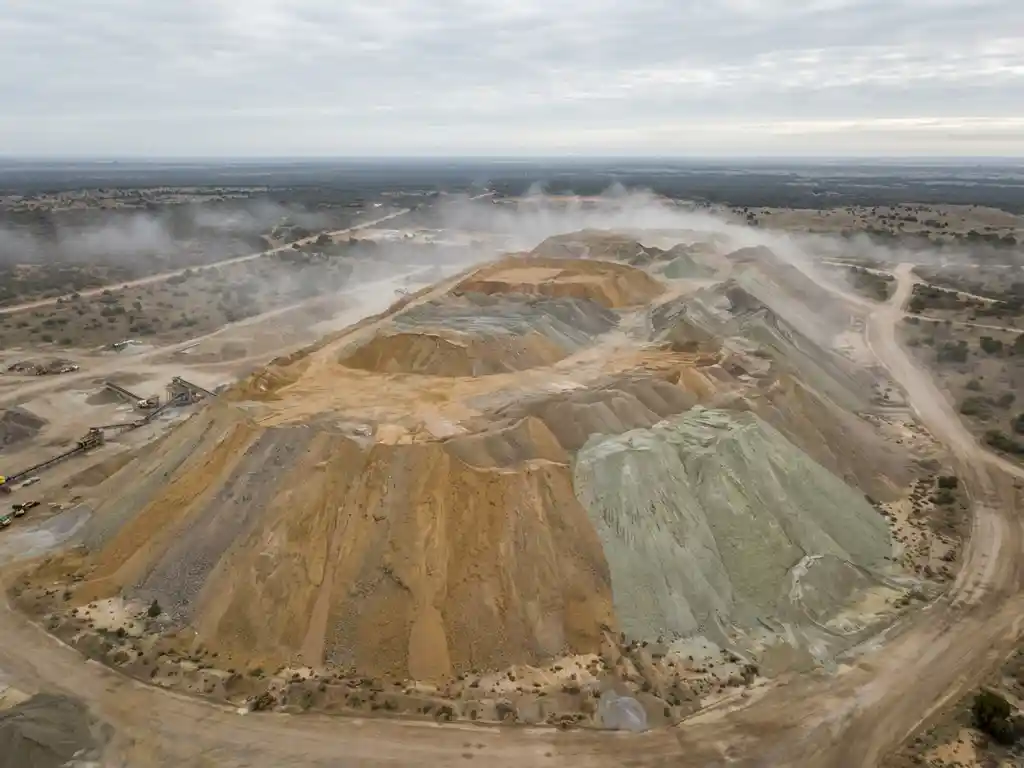
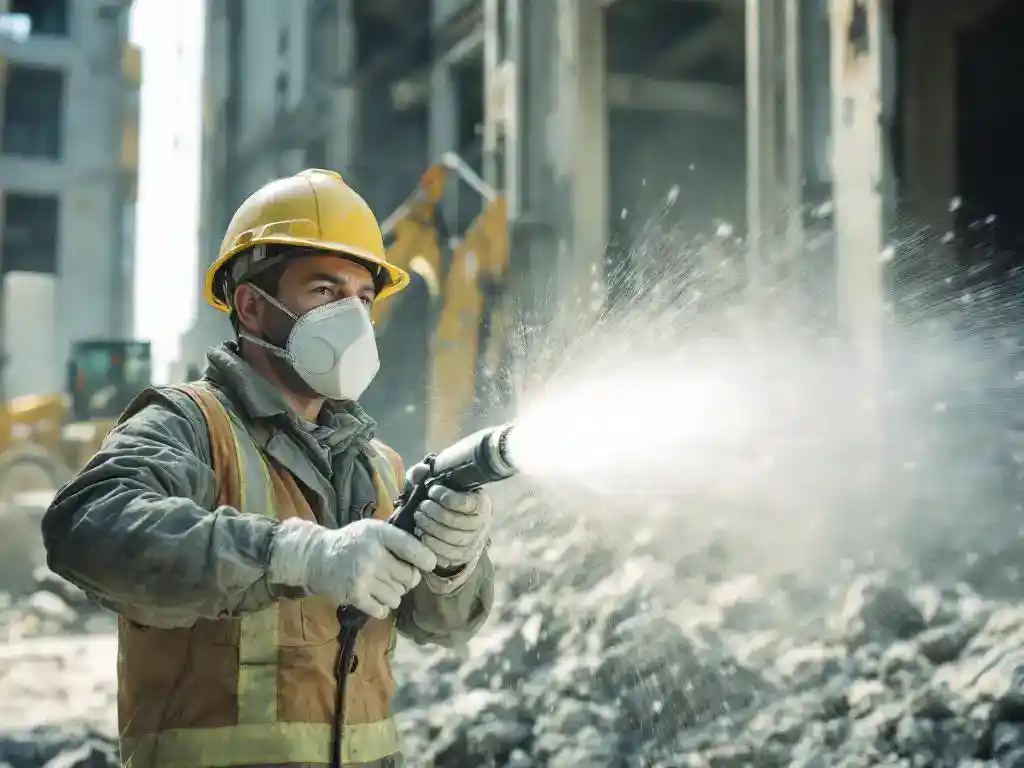
The best method for dust control on a stockpile depends on the type of material, the moisture content, the environmental conditions and the desired duration of protection. Crust formation is generally the most effective approach for open stockpiles that are exposed to wind over the long term, whilst misting and foaming are better suited to active transhipment points. This article discusses the main methods and explains which approach yields the best results in each situation.
What factors determine the choice of a substance control method for a stockpile?
The choice of a dust control method for a stockpile is determined by four factors: the type of material, the moisture content, the environmental conditions and the frequency with which the stockpile is disturbed. Each of these factors directly influences which technique is effective and which is, in fact, counterproductive.
Material type is the starting point for any analysis. Fine-grained materials such as fly ash, coal dust, biomass residues or granulates in fine fractions become airborne more readily than coarser material. The finer the particles, the lower the wind speed required to mobilise them. Materials with a high proportion of fine dust require a method that stabilises and encapsulates the surface structure, not merely wetting.
Moisture content plays a secondary role. Some materials are moisture-sensitive: they clump together, lose quality or become unworkable as soon as they get too wet. In such cases, simply spraying water is not an option, and targeted additives are required to achieve maximum effect with minimal amounts of water.
Environmental conditions, such as wind speed, temperature and exposure to precipitation, determine how quickly a treatment loses its effectiveness. A stockpile in an open, windy harbour environment requires a more durable protective coating than a covered storage hall.
Finally, the frequency of handling is a determining factor. If the pile is handled or moved daily, a permanent crust layer serves little purpose. For long-term storage without handling, crust formation is, in fact, the recommended method. Explore the available dust control solutions to see which approach suits your situation.
How does crust formation work as a dust control measure on a stockpile?
Crust formation works by applying a binding layer to the surface of a stockpile. This layer penetrates the top layer and binds the loose particles together, preventing the wind from gaining a foothold on the material. When a crusting agent is applied correctly, dust emissions are reduced by more than 90 per cent.
The crust-forming agent is applied using a mobile sprayer, directly onto the surface of the storage heap. Once dry, the product forms a flexible, cohesive layer that is resistant to wind and light precipitation. The layer is permeable to moisture, so that the heap is not hermetically sealed and internal processes such as cooling or evaporation can continue as normal.
Crust formation is particularly suitable for materials that are stored for long periods without being frequently processed, such as coal, ores, fly ash and biomass. The treatment can be carried out once or at regular intervals, depending on exposure to weather conditions and the material’s susceptibility to erosion.
A key advantage of modern crust formers is that they are biodegradable. Water-based products containing natural fibres and additives leave no harmful residues in the soil or groundwater, which is relevant for materials that are subsequently processed or transported.
What is the difference between atomisation and additives in dust control?
Water misting and dust control using additives are two different approaches to dust control. Misting works in the air surrounding the dust source by creating a mist curtain that traps airborne particles. Additives are added directly to the material or the spray water to increase binding strength and reduce water consumption. Additives can also be added to the mist to enhance the effectiveness of the water.
During atomisation, fine water droplets are sprayed which are similar in size to the dust particles themselves. The collision between the droplets and the dust particles causes the particles to be brought down. This method is effective at transhipment points, loading and unloading stations, and open stockpiles in windy environments. The disadvantage is that atomisation must be in continuous operation for as long as dust is being released.
Additives work differently: they are added to the spray water or applied directly to the material. By reducing the surface tension of water, the droplets penetrate the material more effectively and bind more particles using less water. This makes additives relevant for situations where water consumption must be limited or where the material must not become too wet.
In practice, misting and additives are often combined. Additives significantly increase the effectiveness of misting systems, meaning less water is required to achieve the same result. This is a significant advantage for companies operating in sectors with strict requirements regarding water consumption or humidity control. Find out which sectors utilise this combined approach.
Which method works for moisture-sensitive materials in a stockpile?
For moisture-sensitive materials in a stockpile, crust formation using a low-dose additive or foam formation are the most suitable methods. Both techniques achieve dust suppression with minimal water addition, thereby preserving the quality and workability of the material.
Moisture-sensitive materials include, for example, certain ores, biomass, pellets or materials that clump or undergo chemical reactions when they absorb too much moisture. Adding large quantities of water via conventional spraying is undesirable for these materials and can sometimes even be harmful to the production process.
The solution lies in the use of additives that reduce the surface tension of water. As a result, a fraction of the normal amount of water is sufficient to achieve the same dust-binding effect. The material’s surface is lightly moistened, but the core temperature and internal moisture content remain within the desired range.
Water-based crust formers can be applied in thin layers to moisture-sensitive materials, with the dosage precisely tailored to the material’s properties. A laboratory test using the client’s own material is a practical way of determining the optimum dosage before a system is commissioned.
How do you choose the most sustainable dust control method for a stockpile?
The most sustainable method of substance management for a stockpile is the one that combines the lowest ecological footprint with the highest effectiveness for the specific material and location. This means: minimal water consumption, biodegradable products and an approach that leaves no hazardous residues behind.
Sustainability in dust control has three dimensions:
- Environmental safety of the products: Additives and crust formers must be biodegradable and must not cause damage to soil, groundwater or the aquatic environment. This is not only an ethical choice, but also a legal requirement in an increasing number of countries and regions.
- Water consumption: Methods that require less water to achieve the same result are more sustainable. Additives that reduce surface tension significantly lower water consumption compared with conventional spraying.
- Long-term effectiveness: A method that works for a long time without repeated treatment is more sustainable than an approach that requires daily maintenance. Crust formation scores well in this regard for dry bulk storage.
When choosing a sustainable method, it is also important to consider the total costs over the installation’s lifespan, including water consumption, labour costs and environmental risks. A method that is initially more expensive but more effective pays for itself through lower operational costs and a reduced risk of fines for dust emissions.
How we help with dust control on a stockpile
We offer a comprehensive package for dust control on stockpiles, tailored to the material, the location and the organisation’s operational requirements. Our approach includes:
- Laboratory test using our own materials to determine the most effective method and dosage
- Advice on the combination of crust formation, foam formation or atomisation based on the specific situation
- Supply of biodegradable additives such as EcoCrust S, EcoCrust Green or Freko-Crust
- Installation and commissioning of spraying and misting systems, fully automatable
- Ongoing delivery and technical support following implementation
Wuvio has been working with companies in the dry bulk, mining, recycling and energy production sectors for over ten years. Our products are 100% safe for people and the environment and comply with current environmental legislation. Would you like to know which approach suits your stockpile? Read more about our working method or get in touch for a no-obligation consultation.