In port transhipment, six dust control solutions are most effective: crust formation, foaming, atomisation, wetting, agglomerating additives and a bespoke combination of these methods. Which approach works best depends on the material, the transhipment method and the location of the dust source. This article answers the most frequently asked questions about dust control in ports, so that you can quickly make the right choice for your situation. Dust control is not a stand-alone measure, but an integral part of operational management: it affects emissions, air quality, compliance and the continuity of your cargo handling operations.
Which substance-related problems are most common in port transhipment?
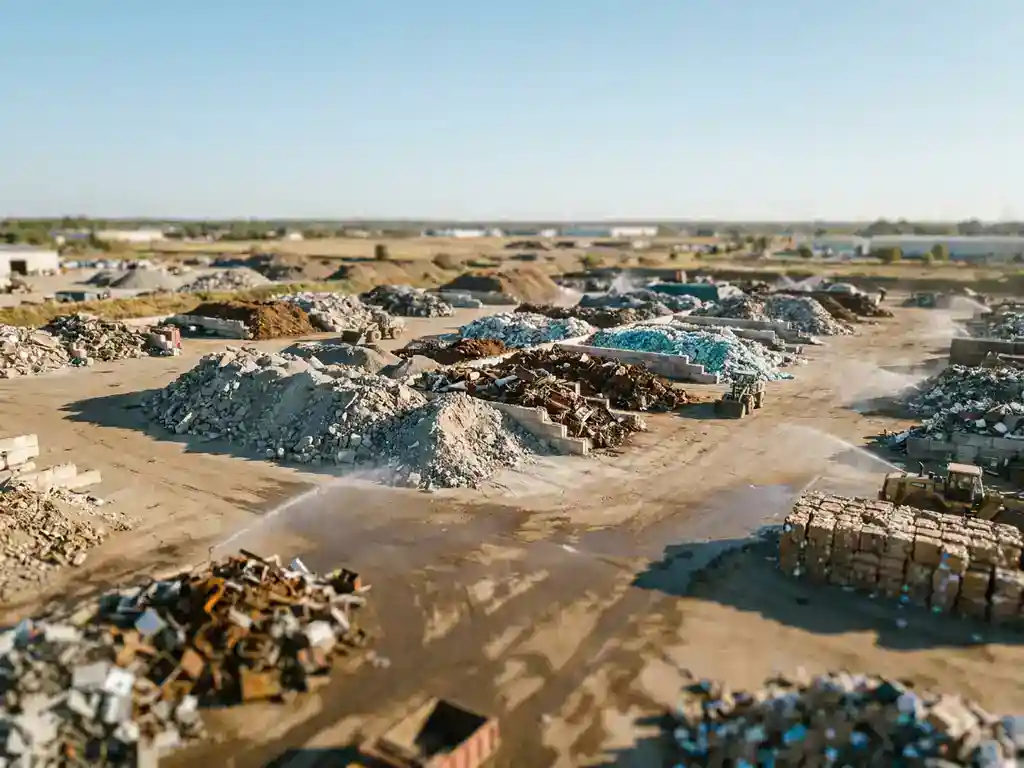
In port transhipment, dust problems arise primarily in three areas: during the loading and unloading of dry bulk goods, during transport via conveyor belts, and during storage in storage yards. Materials such as coal, ores, biomass and raw materials produce large quantities of dust particles when moved or exposed to wind, which then spread rapidly.
The combination of high throughput rates, open storage areas and variable weather conditions makes ports particularly susceptible to dust emissions. Particulate matter spreads not only across the port site itself, but also to local residents and neighbouring businesses. This leads to complaints, health risks for port workers and, increasingly, enforcement action by environmental authorities.
The most common sources of dust (dust hotspots) in ports are:
- Transfer points at taps and grippers
- Conveyor belts and overflow points
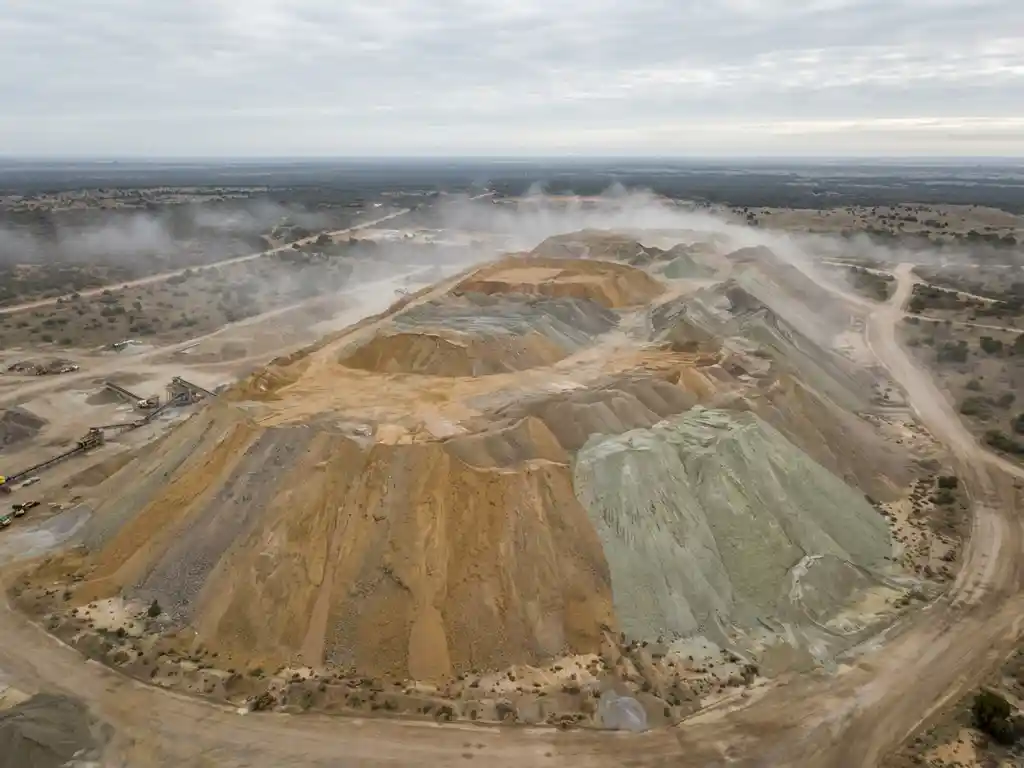
- Stockpiles for wind power
- Access routes across the port site
- Loading and unloading operations for ships and lorries
Effective dust control begins with identifying these hotspots: where does the dust originate, when does it occur, and under what conditions? Dust is often seasonal or weather-dependent (dry periods, wind direction and wind strength) and is linked to the type of cargo and the transhipment rate. Operators and crane drivers are often best placed to identify the problematic areas and times. Their input is therefore a valuable addition to measurements and inspections.
Why is structural dust control in ports becoming increasingly important?
Particulate matter emission requirements are becoming stricter. Looking towards 2030, port operators expect tighter standards for particulate matter, higher requirements for BAT (Best Available Techniques) and stricter emission limits in permits. Anyone who currently only responds to complaints will soon reach those limits.
Dust control is therefore part of your licence to operate. A port that consistently demonstrates that emissions are controlled retains the trust of licensing authorities, local residents and customers. Ad hoc measures are becoming increasingly insufficient: enforcement agencies and the local community demand an approach that works, is measurable and is continuously refined. Furthermore, effective dust control minimises product loss, reduces the risk of downtime due to complaints or enforcement action, and protects the health of staff.
How does crust formation work as a dust control method in ports?
Crust formation works by applying a protective layer to the outside of a storage heap. A water-based additive with binding properties penetrates the material slightly and, once dry, forms a solid crust that traps dust particles, even in strong winds. This makes crust formation particularly suitable for stockpiles of coal, ores and other dry bulk goods in ports.
Products such as EcoCrust S (containing natural fibres) and Freko-Crust (fibre-free and transparent) reduce dust emissions from stockpiles by more than 90 per cent. They are applied via spraying systems and are fully biodegradable. Crust formation replaces repeated water spraying and thus also significantly reduces water consumption.
Crust formation is most effective for materials that remain in the same location for a prolonged period. For stockpiles that are frequently turned or moved, a different approach is more suitable. Also bear in mind practical considerations: the correct dosage, spray pattern and curing time vary depending on the material and weather conditions, so the initial results provide a good opportunity to adjust the approach.
When is foam the right choice for dust control?
Foam generation is the right choice when dust is generated at an active transfer point, such as at grippers, conveyor belts or overflow points. Unlike crust formation, foam acts directly on the dust source the moment the material is in motion. The foam envelops dust particles and binds them to the bulk material before they enter the air.
Freko-Foam is injected onto the dust source under high pressure via spray bars and nozzles. The system can be automated and is only activated when material is actually being moved. This makes it both effective and efficient in use. Foam formation works well with materials such as biomass, coal and recycled materials, which produce a lot of particulate matter during handling.
Foam formation is less suitable for large open stockpiles, but ideal for enclosed or semi-enclosed transhipment points where the dust source is clearly defined. The positioning of the nozzles and the dosage largely determine the result and often require a bespoke solution for each transhipment point.
What is the difference between atomisation and humidification in dust control?
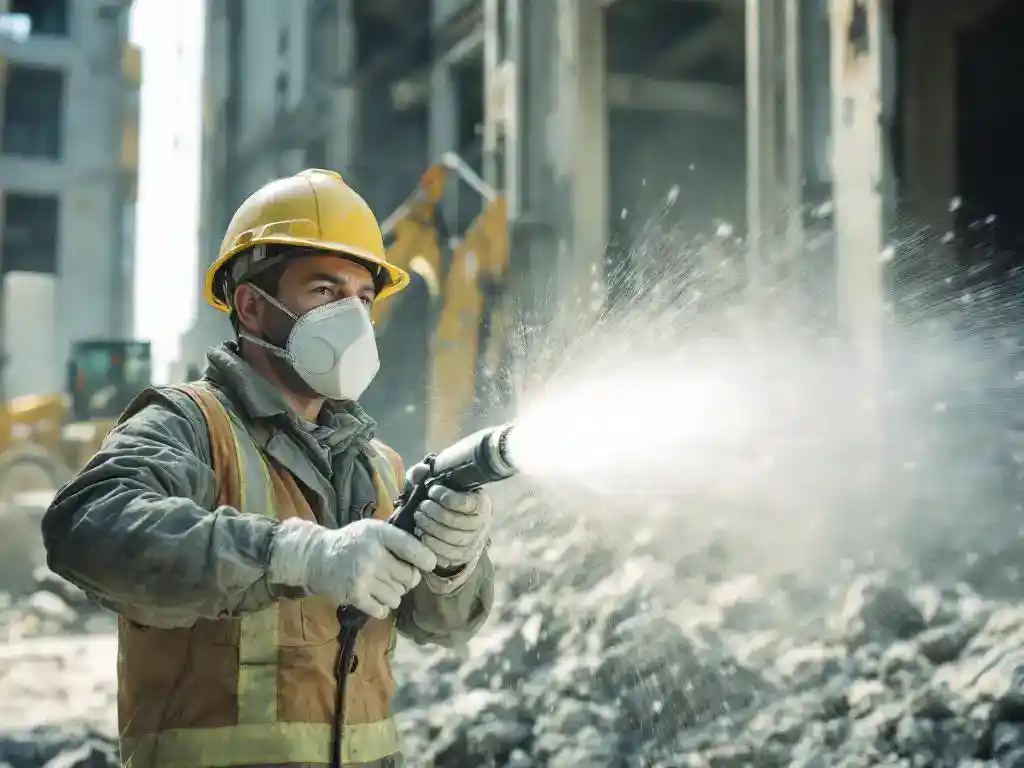
Atomisation and wetting are both water-based methods, but they work in fundamentally different ways. Atomisation creates a mist curtain of extremely fine water droplets around the dust source, which captures dust particles in the air and brings them down to the ground. Wetting applies water directly to the material to prevent dust from becoming airborne when the material is moved or exposed to wind.
In port transhipment, atomisation is used during the loading and unloading of ships and lorries, where dust clouds form directly at the point of discharge. Humidification is more suitable for materials that are made slightly damp prior to transport or transhipment in order to limit dust formation.
Another key difference lies in water consumption. Effective dust control does not automatically involve using more water: more water does not always result in better dust binding and can lead to waste water, puddles or a loss of product quality. Misting with an additive such as Freko-Humidifier reduces the surface tension of water, enabling droplets to bind dust particles more effectively. This makes the system up to ten times more effective than standard water misters, whilst using significantly less water. Humidification without an additive usually requires larger quantities of water to achieve the same result.
How do flocculating additives help to control particulate matter?
Agglomerating additives cause fine dust particles to clump together into larger, heavier particles that no longer remain suspended in the air. This is a targeted approach to fine particulate matter (PM10 and PM2.5), which is difficult to capture using standard spraying or atomisation methods because the particles are too light to be trapped by water droplets.
In ports, agglomerating additives are useful for materials that naturally produce large amounts of fine dust, such as fly ash, fine ore or ground biomass. Agglomeration keeps the material more compact, which also limits mass loss during transport and transhipment. This has a direct effect on the quality and weight of the transhipped product.
Agglomerating additives work best as part of a broader dust control strategy, not as a stand-alone solution. They are often combined with other methods, such as wetting or foaming, to provide a comprehensive approach to both coarse and fine dust in a single process. You can read more about the various solutions for industrial dust control to see which combination best suits your material.
Which pest control method is best suited to your port operations?
The best dust control method for a port operation depends on four factors: the type of material, the location of the dust source, the transhipment method and the required deployment (continuous or on-demand). There is no one-size-fits-all solution, but a clear choice can be made based on these factors.
A practical overview:
- Stockpiles and outdoor storage: crust formation (EcoCrust S or Freko-Crust)
- Active transfer points and conveyor belts: foam formation (Freko-Foam)
- Loading and unloading of ships and lorries: atomisation (Freko-Humidifier)
- Fine dust in light or ground materials: agglomerating additives
- Road networks and internal port routes: road dust control (RDS100+)
In practice, ports combine several methods, as issues arise at different stages of the process. A sound approach consists of four steps:
- Map out the hotspots: determine where, when and under what circumstances dust is generated, and involve operators who are intimately familiar with the sources of dust.
- Select the technique for each source: tailor the method, dosage and equipment to the material, transfer method and location. This often requires a bespoke approach.
- Measure and validate: verify the effect using particulate matter measurements on site or with LiDAR, so that you can demonstrate the emission reduction to the licensing authority and the local community.
- Optimise: use the measurement data to further adjust dosing, nozzle positions and equipment, so that you achieve the best result using as little water and additive as possible.
Further information on dust control for industrial environments will help in mapping out the options.
How we help with dust control in ports
We support port operators in finding and implementing the right anti-fouling solution, from initial analysis to the ongoing supply of additives. Our approach is always bespoke, as every port process and every material is different.
- Analysis of on-site substance sources
- Lab test using our own materials to determine the most effective method
- Advice on the correct combination of techniques (crust formation, foaming, atomisation or agglomeration)
- Installation of bespoke systems, fully automatable
- Ongoing supply of biodegradable additives, safe for people and the environment
Looking for an effective solution for industrial dust control? We’d be happy to help you find a suitable approach. Take a look at our dust control solutions or get in touch for personalised advice.
Related Articles
- How can you reduce water consumption in dust control within the mining industry?
- Which four factors determine how far dust pollution spreads?
- What are the legal requirements for dust control in the mining industry?
- How do you protect employees from dust in the workplace?
- What are the symptoms of inhaling too much dust?