Dust pollution becomes a problem for local residents as soon as fine or coarse dust reaches their immediate living environment and causes health complaints, nuisance or damage there. This happens more quickly than many companies expect: wind, drought and intensive transhipment activities can cause dust particles to settle hundreds of metres away. You can read below about which concentrations are hazardous, which activities cause the most nuisance, when companies become legally liable, and how to manage dust on a structural basis.
At what concentration does dust become harmful to local residents?
Particulate matter is harmful to local residents as soon as the concentration of particulate matter (PM10 and PM2.5) exceeds the limit values set out in European and national air quality standards. For PM10, the annual average limit value is 40 micrograms per cubic metre of air; for the finer PM2.5, it is 25 micrograms per cubic metre. Even at lower levels, short-term peak concentrations can cause health problems in vulnerable groups such as children, the elderly and people with respiratory conditions.
It is important to understand the distinction between coarse particulate matter (PM10) and fine particulate matter (PM2.5). Coarse particulate matter mainly causes nuisance: it settles on building facades, garden furniture and cars, leading to complaints from local residents. Fine particulate matter penetrates deeper into the airways and lungs, thereby posing a serious long-term health risk. Furthermore, industrial dust often contains heavy metals, silica or other harmful components that further increase its toxicity.
Even below the official limit values, local residents may experience nuisance. Visible dust fallout, a gritty taste in the air or persistent irritation of the eyes and throat are signs that dust levels are too high, even if measured values formally fall within the standards. A further factor is that the standards are expected to become stricter by 2030: the European Air Quality Directive aims for lower limit values for particulate matter, and this already requires companies to adopt a structural approach rather than taking ad hoc measures.
Which industrial activities cause the most dust nuisance?
The industrial activities that cause the most dust nuisance for local residents are dry bulk handling, crushing and screening plants, open storage yards, recycling plants and construction activities. A common feature is that, in all these activities, large quantities of dry, fine material are moved, dumped or processed in the open air.
The following activities are at the top of the list when it comes to the spread of dust into the surrounding area:
- Dry bulk handling in ports: the loading and unloading of ores, coal, biomass and agri-bulk generates large clouds of dust which disperse rapidly in the wind
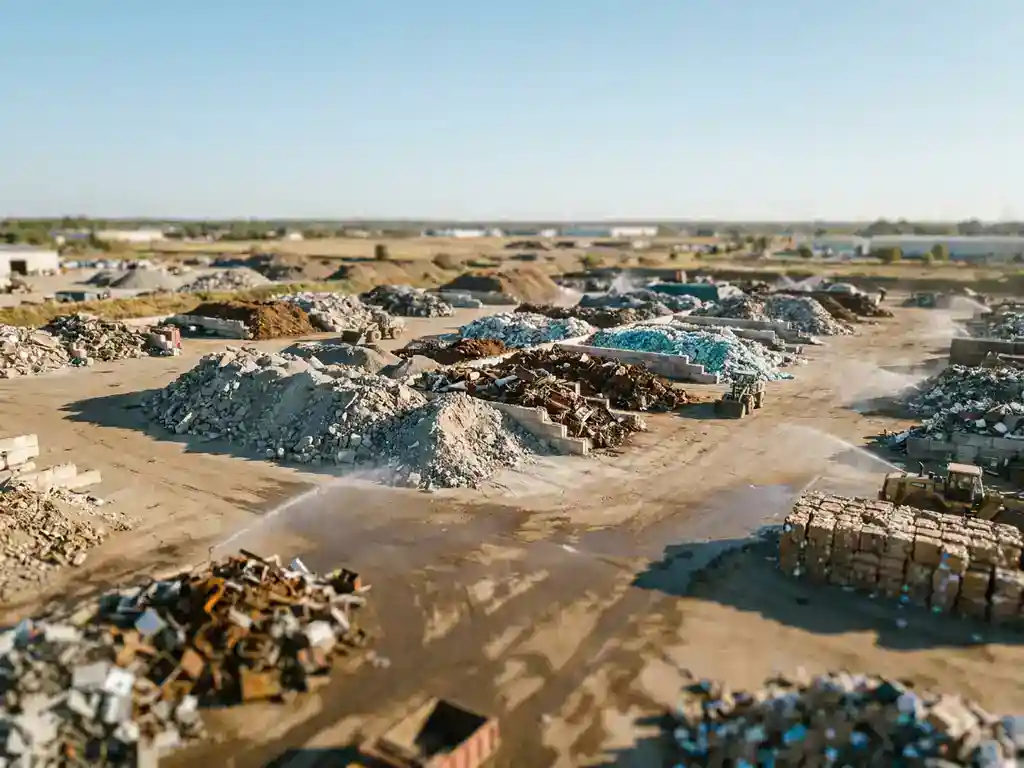
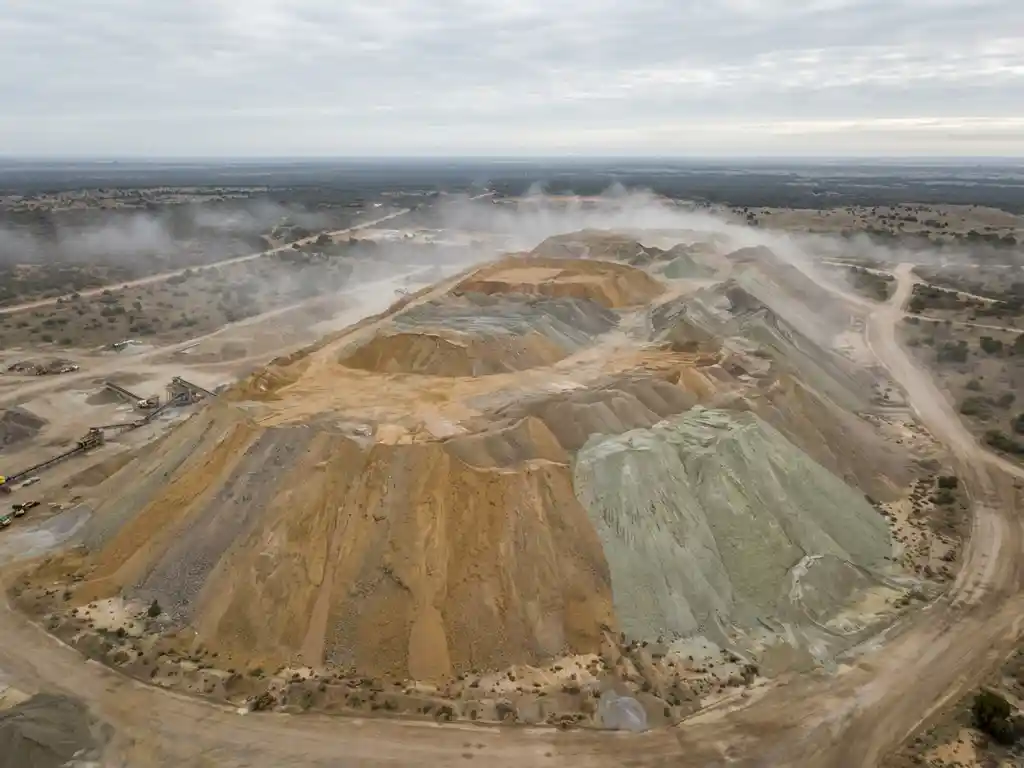
- Open storage areas (stockpiles): uncovered raw materials such as sand, coal or fly ash are constantly blown about in dry and windy weather
- Crushers and screening plants: the mechanical processing of stony material, rubble or ore produces significant quantities of particulate matter
- Recycling companies: the processing of construction waste, paper and plastics generates dust and odours that impact the surrounding area
- Construction and demolition work: earthworks, demolition and cement processing are temporary but generate significant amounts of dust
- Power stations and biomass power stations: the storage and transport of fuel lead to the dispersion of fine particles, particularly in the case of biomass
See how dust control solutions are deployed in the sectors with the highest dust exposure for an overview by industry.
How do you map out the dust hotspots on your site?
Effective dust control begins with insight: where does the dust originate, when does it arise, and under what circumstances? Without such an analysis, measures are quickly implemented in the wrong place or at the wrong time. A hotspot analysis is therefore the first step, even before selecting a technique or product.
A practical approach consists of the following steps:
- Identify all potential sources of dust: consider tip sites, conveyor belts, transhipment points, storage areas, vehicle routes, and loading and unloading areas
- Determine the timing and frequency: does the dust arise continuously, during specific process stages, or only in dry and windy weather or during the summer months?
- Link dust peaks to conditions: wind direction, wind speed, humidity, material moisture content and the intensity of the activity
- Consult the operators: staff on the ground often know exactly where and when things get hectic, and which locations are repeatedly the subject of complaints from local residents
- Prioritise impact: tackle first the sources that bring the most dust to the site boundary and the residential buildings
This creates a well-founded picture of where measures will yield the greatest returns. It prevents you from wasting valuable resources in areas where they make little difference.
How far can industrial dust spread?
Depending on particle size, wind speed and source height, industrial dust can spread over distances ranging from a few tens of metres to several kilometres. Coarse particulate matter (particles larger than PM10) usually settles within a radius of 100 to 500 metres from the source. Fine particulate matter (PM2.5 and smaller) can travel tens of kilometres under favourable wind conditions before settling.
Various factors determine the scope of the subject matter:
- Particle size: the smaller the particle, the longer it remains in the air and the further it travels
- Wind speed and direction: a constant wind of 5 m/s can carry dust a considerable distance from the source
- Source height: dust released at height (for example, from a unloading installation or silo) spreads further than dust at ground level
- Air humidity: in dry conditions, particles remain suspended for longer; humid air causes faster agglomeration and precipitation
- Site conditions: buildings and vegetation inhibit spread, whilst open areas actually enhance it
This is relevant for businesses located near residential areas or sensitive sites: even an activity 300 metres away can, in unfavourable wind conditions, cause visible dust fallout for local residents.
When are businesses legally liable for dust nuisance?
Companies are legally liable for dust nuisance as soon as they exceed the limit values set out in the Environmental Management Act or the environmental permit, or when local residents suffer demonstrable damage or nuisance that can be directly attributed to the company’s activities. In the Netherlands, this falls under the duty of care set out in the Environmental Management Act and the provisions of the Activities Decree or the environmental permit.
Liability may arise in two ways:
- In terms of administrative law: the competent authority (municipality or province) may enforce regulations on the basis of breaches of emission standards or provisions set out in the environmental permit. This may result in an order subject to a penalty payment or even the suspension of activities.
- Under civil law: local residents may hold a company liable for damage suffered (for example, cleaning of building façades, damage to health or a reduction in property value) on the grounds of unlawful nuisance.
The threshold for liability does not lie solely in exceeding measurable standards. Judges also assess whether a company has taken reasonable measures to limit dust dispersion. A company that can demonstrate it has invested in dust control is in a stronger position than one that has taken no measures whatsoever.
Dust control therefore directly affects the licence to operate. Recurring complaints from local residents, enforcement requests or breaches of emission limits can lead to stricter permit conditions, operational restrictions or even a shutdown. Structural dust control is therefore not only an environmental issue, but also a matter of compliance and business continuity: it safeguards the permit and public support in the local community.
Regulatory requirements are also changing. As we move towards 2030, requirements regarding air quality and industrial emissions will be further tightened, partly through the implementation of European directives, stricter BAT (Best Available Techniques) requirements and lower emission limit values for dust. Companies would be well advised to proactively evaluate and document their dust control systems now.
How can companies prevent dust from spreading into the surrounding environment?
Companies can prevent dust from spreading into the surrounding environment through a combination of source-oriented measures, process adjustments and the use of effective dust control techniques. The most effective approach focuses on containing the dust at source, so that it never has the chance to spread. Dust control works best when it is an integral part of business operations – alongside, for example, process planning, maintenance and emissions management – rather than as a one-off emergency measure.
Practical measures that have been proven to work:
- Covering storage areas: shielding stockpiles with tarpaulins, nets or allowing a crust to form prevents the wind from dislodging dry particles
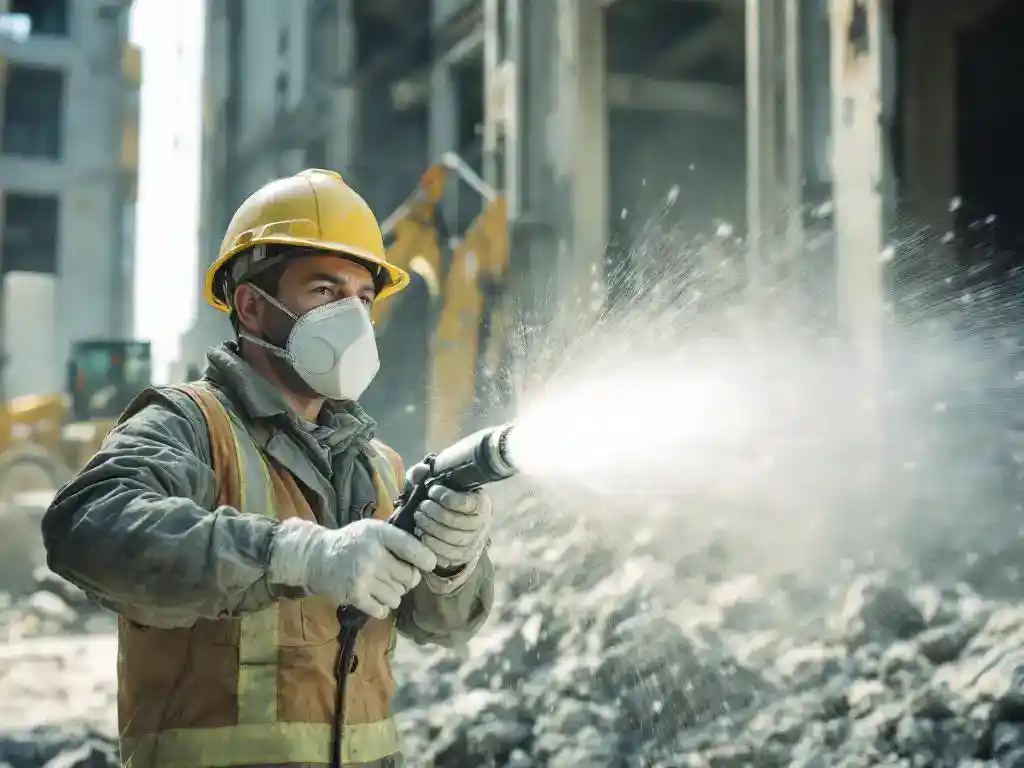
- Moistening of material: lightly moistening dry bulk goods before and during transhipment significantly reduces dust formation
- Windbreaks and vegetated buffers: physical barriers around the site help to prevent the spread of dust into the surrounding area
- Adjusting work processes: reducing the drop height when tipping, lowering driving speeds on unpaved roads and avoiding activities in strong winds
- Monitoring and reporting: continuous measurement of dust concentrations at the site boundary enables early intervention
With regard to water: effective dust control does not automatically mean using more water. Extra water evaporates quickly in dry and windy weather and can also lead to puddles, mud and drainage problems. Additives that reduce the surface tension of water or form a crust improve dust binding and can contribute to more efficient water use. They are most effective as part of a broader strategy, alongside source control measures, process adjustments and monitoring.
Measuring and validating: does the approach really work?
Measures are only convincing if you can demonstrate their effect. Therefore, carry out measurements before and after implementing a measure, and continue to measure systematically thereafter. Consider particulate matter measurements (PM10 and PM2.5) at the site boundary and near the nearest residential properties, dust deposition measurements and, for larger sites, LiDAR to visualise and track dust plumes.
You should then actively use the measurement data to refine the approach: adjust the dosage, frequency and equipment according to what the measurements show. These results can vary significantly depending on the location, material and process, meaning that the correct technique and dosage often require a bespoke approach. Furthermore, well-documented measurement results provide strong evidence to the licensing authority and local residents that you are taking reasonable measures.
More information on the techniques available for each application can be found on the page about industrial dust control solutions.
How we help prevent dust nuisance for local residents
Wuvio helps industrial companies to systematically prevent the release of dust into the environment, from the initial analysis through to the ongoing supply of biodegradable additives. Our approach is always bespoke: every dust problem is different, and the solution depends on the material, the process and the environment. For us, additives form part of a broader dust control strategy, alongside hotspot analysis, process adjustments and measurements.
- Lab testing with your own materials: we first carry out tests using your specific materials in our own laboratory, so that the solution is guaranteed to work
- Crust formation on storage sites: our crust-forming products, such as EcoCrust S, reduce dust formation on stockpiles by more than 90 per cent
- Humidification and atomisation: at transhipment points and on conveyor belts, we create a mist screen that binds dust particles before they are released
- Road dust control: RDS100+ keeps traffic lanes and the internal road network moist for longer, preventing moving traffic from causing dust clouds
- Fully biodegradable: all products are safe for people, local residents and the environment, and contain no hazardous chemicals
It is always possible to start small with a trial and scale up once it works. Read more about our approach or contact us directly for a no-obligation consultation.
Related Articles
- How will dust control on roads in the mining sector work in 2027?
- Which four pest control methods will port authorities compare most frequently in 2027?
- When does dust control at ore transhipment points fall short?
- Dust control at ports: mobile or fixed system?
- What can you do about dust when moving coal with a shovel?