Dust pollution becomes a problem for local residents as soon as fine or coarse dust reaches their immediate living environment and causes health complaints, nuisance or damage there. This happens more quickly than many companies expect: wind, drought and intensive transhipment activities can cause dust particles to settle hundreds of metres away. You can read below about which concentrations are dangerous, which activities cause the most nuisance, and when companies become legally liable.
At what concentration does dust become harmful to local residents?
Particulate matter is harmful to local residents as soon as the concentration of particulate matter (PM10 and PM2.5) exceeds the limit values set out in European and national air quality standards. For PM10, the annual average limit value is 40 micrograms per cubic metre of air; for the finer PM2.5, it is 25 micrograms per cubic metre. Even at lower levels, short-term peak concentrations can cause health problems in vulnerable groups such as children, the elderly and people with respiratory conditions.
It is important to understand the distinction between coarse particulate matter (PM10) and fine particulate matter (PM2.5). Coarse particulate matter mainly causes nuisance: it settles on building facades, garden furniture and cars, leading to complaints from local residents. Fine particulate matter penetrates deeper into the airways and lungs, thereby posing a serious long-term health risk. Furthermore, industrial dust often contains heavy metals, silica or other harmful components that further increase its toxicity.
Even below the official limit values, local residents may experience nuisance. Visible dust fallout, a gritty taste in the air or persistent irritation of the eyes and throat are signs that dust levels are too high, even if measured values are formally within the standards.
Which industrial activities cause the most dust nuisance?
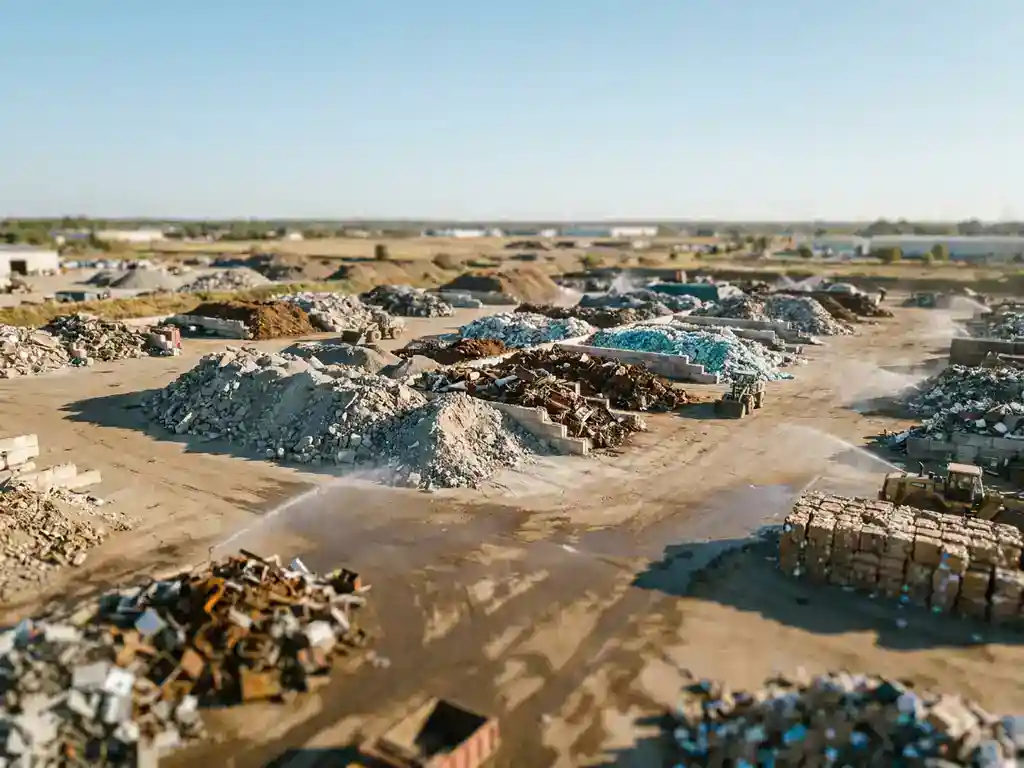
The industrial activities that cause the most dust nuisance for local residents are dry bulk handling, crushing and screening plants, open storage yards, recycling plants and construction activities. A common feature is that, in all these activities, large quantities of dry, fine material are moved, dumped or processed in the open air.
The following activities are at the top of the list when it comes to the spread of dust into the surrounding area:
- Dry bulk handling in ports: the loading and unloading of ores, coal, biomass and agri-bulk generates large clouds of dust which disperse rapidly in the wind
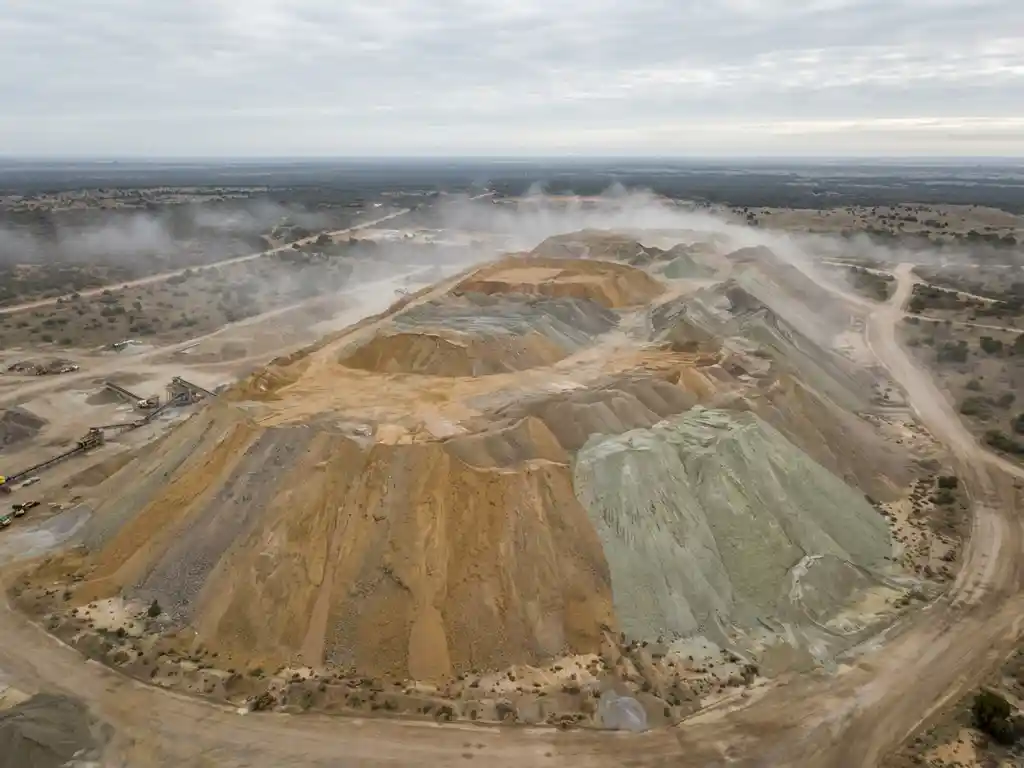
- Open storage areas (stockpiles): uncovered raw materials such as sand, coal or fly ash are constantly blown about in dry and windy weather
- Crushers and screening plants: the mechanical processing of stony material, rubble or ore produces significant quantities of particulate matter
- Recycling companies: the processing of construction waste, paper and plastics generates dust and odours that impact the surrounding area
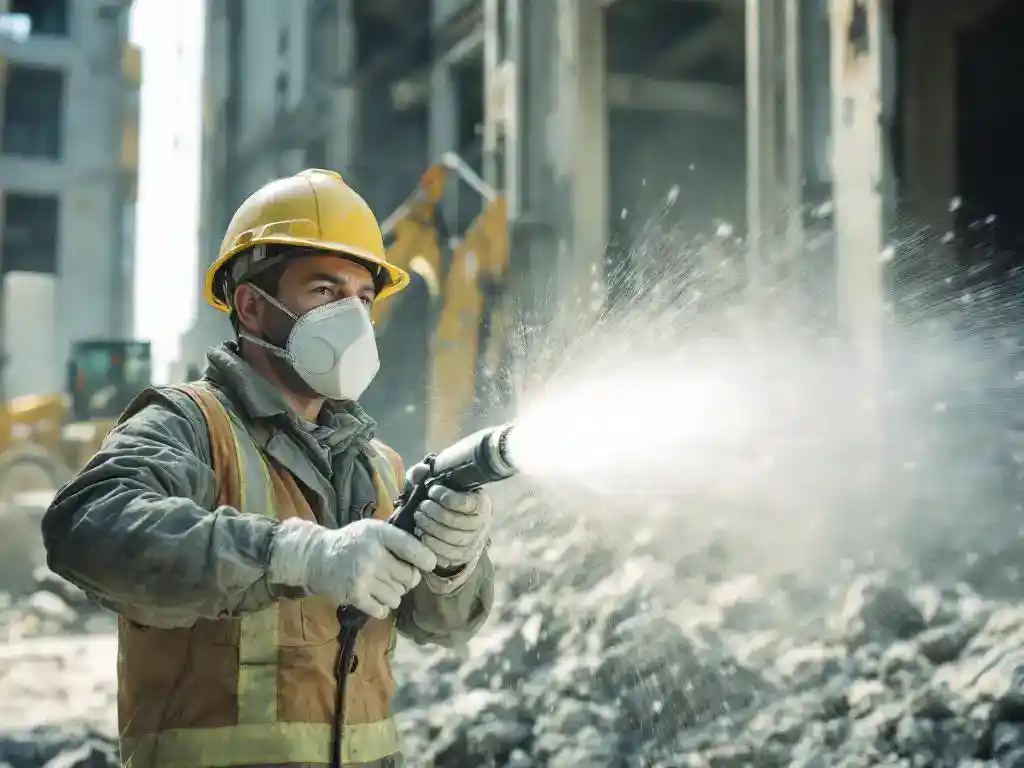
- Construction and demolition work: earthworks, demolition and cement processing are temporary but generate significant amounts of dust
- Power stations and biomass power stations: the storage and transport of fuel lead to the dispersion of fine particles, particularly in the case of biomass
See how dust control solutions are deployed in the sectors with the highest dust exposure for an overview by industry.
How far can industrial dust spread?
Depending on particle size, wind speed and source height, industrial dust can spread over distances ranging from a few tens of metres to several kilometres. Coarse particulate matter (particles larger than PM10) usually settles within a radius of 100 to 500 metres from the source. Fine particulate matter (PM2.5 and smaller) can travel tens of kilometres under favourable wind conditions before settling.
Various factors determine the scope of the subject matter:
- Particle size: the smaller the particle, the longer it remains in the air and the further it travels
- Wind speed and direction: a constant wind of 5 m/s can carry dust a considerable distance from the source
- Source height: dust released at height (for example, from a unloading installation or silo) spreads further than dust at ground level
- Air humidity: in dry conditions, particles remain suspended for longer; humid air causes faster agglomeration and precipitation
- Site conditions: buildings and vegetation inhibit spread, whilst open areas actually enhance it
This is relevant for businesses located near residential areas or sensitive sites: even an activity 300 metres away can, in unfavourable wind conditions, cause visible dust fallout for local residents.
When are businesses legally liable for dust nuisance?
Companies are legally liable for dust nuisance as soon as they exceed the limit values set out in the Environmental Management Act or the environmental permit, or when local residents suffer demonstrable damage or nuisance that can be directly attributed to the company’s activities. In the Netherlands, this falls under the duty of care set out in the Environmental Management Act and the provisions of the Activities Decree or the environmental permit.
Liability may arise in two ways:
- In terms of administrative law: the competent authority (municipality or province) may enforce regulations on the basis of breaches of emission standards or provisions set out in the environmental permit. This may result in an order subject to a penalty payment or even the suspension of activities.
- Under civil law: local residents may hold a company liable for damage suffered (for example, cleaning of building façades, damage to health or a reduction in property value) on the grounds of unlawful nuisance.
The threshold for liability does not lie solely in exceeding measurable standards. Judges also assess whether a company has taken reasonable measures to limit dust dispersion. A company that can demonstrate it has invested in dust control is in a stronger position than one that has taken no measures whatsoever.
In 2026, regulations concerning air quality and industrial emissions will be further tightened through the implementation of European directives. Companies would be well advised to proactively evaluate and document their dust control systems.
How can companies prevent dust from spreading into the surrounding environment?
Companies can prevent dust from spreading into the surrounding environment through a combination of source-focused measures, process adjustments and the use of effective dust control techniques. The most effective approach focuses on containing the dust at source, so that it never has the chance to spread.
Practical measures that have been proven to work:
- Covering storage areas: shielding stockpiles with tarpaulins, nets or allowing a crust to form prevents the wind from dislodging dry particles
- Moistening of material: lightly moistening dry bulk goods before and during transhipment significantly reduces dust formation
- Windbreaks and vegetated buffers: physical barriers around the site help to prevent the spread of dust into the surrounding area
- Adjusting work processes: reducing the drop height when tipping, lowering driving speeds on unpaved roads and avoiding activities in strong winds
- Monitoring and reporting: continuous measurement of dust concentrations at the site boundary enables early intervention
More information on the techniques available for each application can be found on the page about industrial dust control solutions.
How we help prevent dust nuisance for local residents
Wuvio helps industrial companies to systematically prevent the release of dust into the environment, from the initial analysis through to the ongoing supply of biodegradable additives. Our approach is always bespoke: every dust problem is different, and the solution depends on the material, the process and the environment.
- Lab testing with your own materials: we first carry out tests using your specific materials in our own laboratory, so that the solution is guaranteed to work
- Crust formation on storage sites: our crust-forming products, such as EcoCrust S, reduce dust formation on stockpiles by more than 90 per cent
- Humidification and atomisation: at transhipment points and on conveyor belts, we create a mist screen that binds dust particles before they are released
- Road dust control: RDS100+ keeps traffic lanes and the internal road network moist for longer, preventing moving traffic from causing dust clouds
- Fully biodegradable: all products are safe for people, local residents and the environment, and contain no hazardous chemicals
It is always possible to start small with a trial and scale up once it works. Read more about our approach or contact us directly for a no-obligation consultation.
Related Articles
- How do ports tackle dust during bulk cargo transhipment from ships?
- How do you integrate substance control into an existing safety plan?
- How does dust control in the steel industry differ from that in other heavy industries?
- How do you prevent dust control measures from damaging the material itself?
- How does misting work against dust?