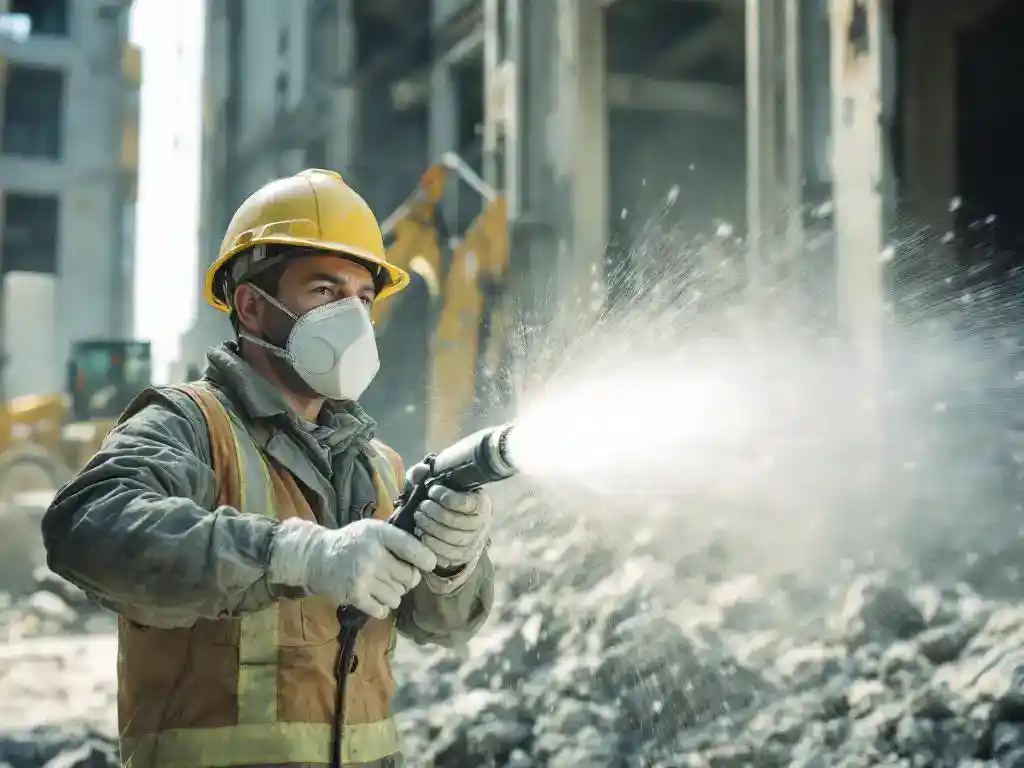
As an industrial company, you must measure various parameters, such as **PM10 and PM2.5 particulate matter**, total particulate concentration and sector-specific substances. The measurement frequency ranges from continuous monitoring to periodic measurements, depending on the size of your business and your sector. You must report this data to regulatory authorities in accordance with Dutch and European legislation. In addition to taking measurements, there are also obligations to report instances where limits are exceeded and to take corrective action.
What legal requirements apply to the measurement of dust emissions?
The legal requirements for measuring dust emissions are laid down in the **Environmental Management Act** and various European directives. Depending on your sector and the size of your business, specific measurement obligations apply which you must comply with in order to meet environmental legislation.
The key Dutch legislation stems from the Environmental Management Act, which sets out emission limit values and monitoring obligations. For many industries, the BREF documents (Best Available Techniques Reference Documents) also apply, setting sector-specific requirements for the monitoring of particulate emissions.
Supervision is carried out by various authorities. The Human Environment and Transport Inspectorate (ILT) supervises large industrial companies, whilst provinces and local authorities are responsible for smaller businesses. Significant fines may be imposed if limit values are exceeded.
Measurement obligations apply primarily to companies with an environmental permit that generate dust emissions. This often concerns industries such as mining, recycling, power stations and dry bulk transhipment. The specific requirements vary by sector and are determined by the nature of your business processes and the potential impact on the environment.
What exactly do you need to measure when it comes to dust emissions?
When measuring particulate matter emissions, you assess various parameters: **PM10 and PM2.5 particulate matter**, the total particulate concentration and specific substances relevant to your sector. The exact parameters depend on your business processes and the materials you process.
PM10 and PM2.5 are the most common measurement parameters. PM10 refers to particulate matter smaller than 10 micrometres, whilst PM2.5 refers to particles smaller than 2.5 micrometres. These fine particulate matter pose the greatest risk to public health, as they can penetrate deep into the lungs.
In addition, you often measure the total dust concentration, which encompasses all airborne particles. Depending on your sector, specific substances may be relevant, such as asbestos in demolition work, quartz dust in sandblasting or metal particles in steel production.
The measurement locations are crucial for reliable results. Measurements are usually taken at emission points such as chimneys, but also at the site boundary and at sensitive locations in the surrounding area. Weather conditions such as wind and precipitation influence the measurements; therefore, continuous monitoring is often necessary to obtain representative data.
How often do you need to measure and report dust emissions?
The measurement frequency ranges from **continuous monitoring** for large industrial companies to periodic measurements for smaller businesses. Major dust emitters often need to monitor 24/7, whilst smaller businesses can carry out measurements monthly or quarterly.
Continuous monitoring is mandatory for companies with high dust emissions or those operating in sensitive areas. These systems record real-time data and automatically trigger an alarm in the event of exceedances. Periodic measurements are carried out by certified measurement institutes and take place according to a set schedule.
Reporting frequencies vary by sector. Large industrial companies often report monthly to the relevant authorities, whilst smaller companies report annually. If limit values are exceeded, you must report this immediately and take corrective action.
Reporting deadlines are strict. Annual reports must usually be submitted by 31 March of the following year. In the event of non-compliance, you often have 24 to 48 hours to report and submit an action plan. Failure to comply may result in fines and the suspension of activities.
Which measurement methods are permitted for dust emissions?
**Certified measurement methods** in accordance with Dutch and European standards, carried out using calibrated equipment by accredited measurement institutes, are permitted. You can choose between direct measurement methods that provide real-time data and indirect methods involving the analysis of samples.
Direct measurement methods use sensors that continuously measure dust concentrations. These systems are ideal for continuous monitoring and trigger an immediate alarm if limits are exceeded. However, they do require regular calibration and maintenance to ensure accurate results.
Indirect measurement methods involve collecting air samples which are analysed in laboratories. This method is more accurate for specific substances, but does not provide real-time results. It is often used for periodic measurements or for complex substance analyses.
All measuring equipment must be certified in accordance with relevant standards and calibrated regularly. Measurement institutes must be recognised by the Dutch Accreditation Council. The choice of measurement method depends on your specific pest control requirements and legal obligations.
How we assist with dust emission monitoring and compliance
We support companies in fully complying with dust emission measurement requirements, from selecting suitable measurement methods to drawing up reports and implementing effective dust control solutions that reduce emissions at source.
Our expertise includes:
- Compliance advice – We help you understand which measurement obligations apply to your business and sector.
- Development of a measurement strategy – Together, we determine the optimal measurement locations, frequency and methods.
- Support with reporting – We assist with the preparation of mandatory reports for regulatory authorities.
- Preventive dust control – Our biodegradable additives reduce dust emissions by 70–80 per cent at source.
- Optimisation of monitoring – We help to interpret measurement results and translate them into effective substance control measures.
By effectively controlling dust emissions with our sustainable solutions, you not only improve your compliance but also enhance working conditions for your staff and prevent complaints from local residents.
Would you like to know how our dust control solutions can improve your measurement results and simplify compliance? Find out more about our expertise in industrial dust control or contact us directly for a no-obligation consultation.
Related Articles
- Which three solutions combat the wind-borne dispersion of dust in ports?
- How does dust pollution spread from a site into the surrounding area?
- What are the first three steps to take in the event of an acute dust nuisance on an outdoor site?
- What do you do if the local authority approaches you about dust nuisance?
- How do you protect employees from dust in the workplace?