For dust control in the mining industry, five dust suppressants are most suitable: water-based crust formers, foam-forming additives, agglomerating agents, hygroscopic road dust suppressants and spraying with surface-tension reducers. Which binder works best depends on the type of material, the dust source and the environmental conditions. Dust control is not an isolated measure: it relates to emissions, air quality, regulatory compliance and business continuity. The questions below will help you make the right choice.
How do dust suppressants work in mining operations?
Dust binders work by binding loose dust particles to larger particles or to the surface of the material, so that they are no longer released into the air. In mining operations, they are used on stockpiles, conveyor belts, transhipment points and roads within the mine site. The binder is applied via spray systems, foam bars or misting systems, depending on the application.
The mechanism of action varies depending on the type of binder. A crust-forming agent forms a protective layer on the surface of a storage heap, preventing wind and mechanical disturbance from dislodging dust. A foaming additive coats dust particles at source, causing them to settle immediately before they reach the air. Agglomerating agents cause fine particles to clump together into larger, heavier granules that settle more quickly. Hygroscopic binders attract moisture from the environment and keep the surface damp for longer, which prevents dust from spreading onto roadways.
Each of these mechanisms targets a specific stage in the dust formation process. This means that the choice of the right binder depends on the following questions: where does the dust form, when does it form, and how does the material behave under those conditions?
What factors determine which dust binder is suitable for your situation?
The choice of a dust suppressant in the mining industry is determined by four factors: the type of material, the source of dust, the environmental conditions and the desired duration of effectiveness. No single dust suppressant is universally applicable. A binder that works well on a coal stockpile may be unsuitable for an iron ore stockpile with a different grain size and moisture sensitivity.
- Material type: fine-grained materials such as fly ash or fine sand require a different approach to coarsely crushed ore. The surface structure and moisture content of the material determine how well a binder adheres.
- Dust source: dust from a crushing plant requires a fast-acting foaming agent, whilst dust from long-term outdoor storage is better tackled with a crust-forming agent.
- Environmental conditions: high wind speeds, rain, frost or extreme heat affect the performance of any binder. Some binders are less effective at low temperatures.
- Duration of effect: for temporary dust control during works, a short-acting binder is sufficient. For permanent stockpiles, a binder with a longer lifespan is required.
In addition, the available infrastructure plays a role. Not every mining company has the facilities to inject foam under high pressure. Practical applicability is therefore just as important as technical suitability.
Start by mapping out the substance hotspots
Before choosing a binder, it is wise first to determine where the dust is generated, at what times and under what circumstances. A practical approach consists of a number of steps:
- Identify all potential sources of dust: crushers, transhipment points, conveyor belts, stockpiles, loading and unloading areas, and access roads.
- Determine for each source when the dust is released: continuously during the process, only under certain weather conditions, or specifically during particular activities.
- Record the conditions that influence emissions, such as wind direction, wind speed, the moisture content of the material and seasonal influences.
- Involve the operators: they are familiar with the problem areas from daily experience and are often the first to spot where and when things go wrong.
- Rank the hotspots according to their contribution to total emissions, so that measures are implemented where they yield the greatest benefits.
In this way, the choice of binder becomes a well-founded consideration rather than a trial-and-error decision.
What is the difference between crust formation, foam formation and agglomeration as dust-binding methods?
Crust formation, foam formation and agglomeration are three different mechanisms for dust control in mining, each targeting a different phase of the dust formation process and a different application scenario.
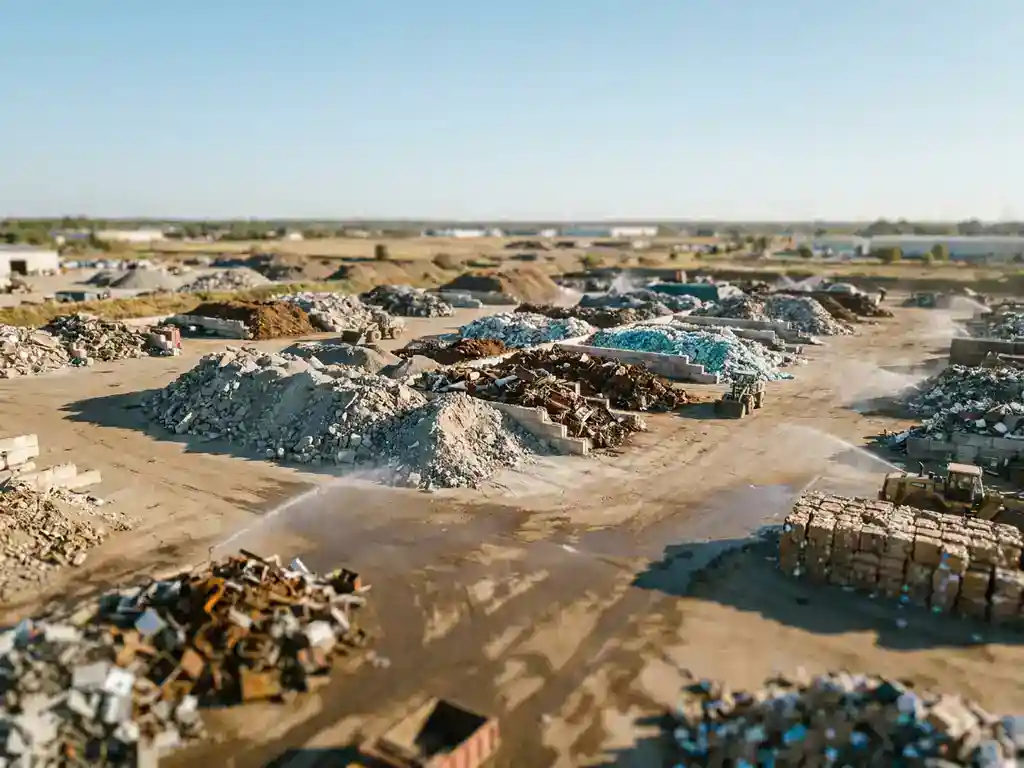
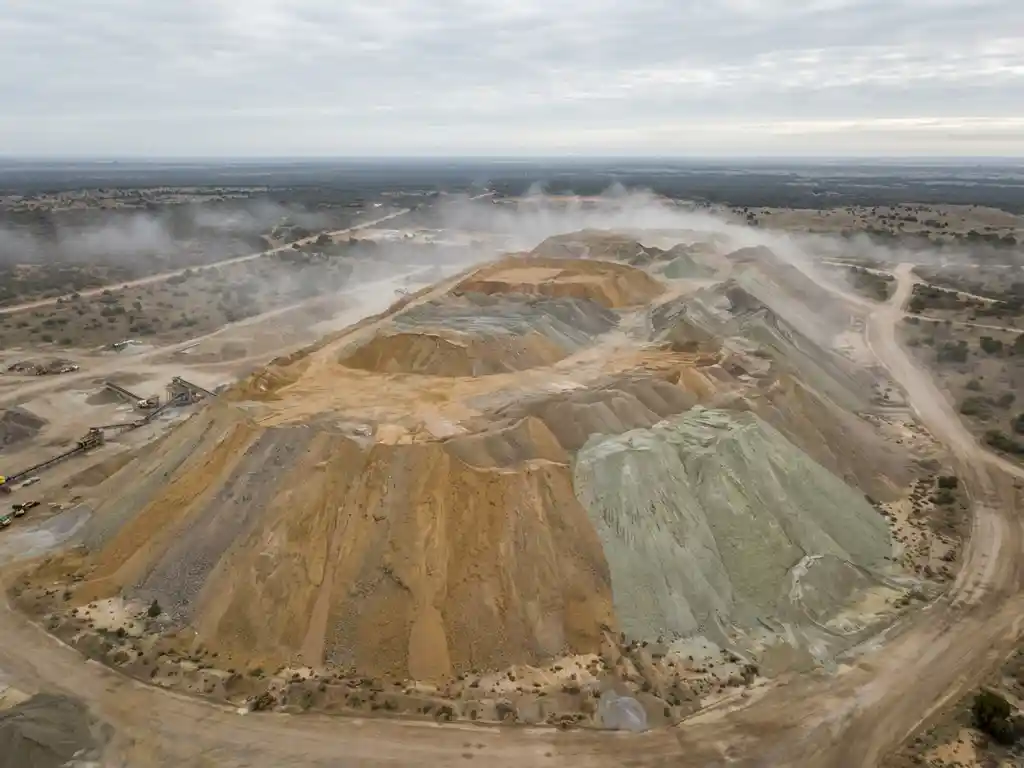
Crust formation is aimed at outdoor storage. A liquid crusting agent is sprayed onto the surface of a stockpile and, once dry, forms a solid, protective layer. This layer prevents wind or rain from dislodging dust particles. Crust formers are particularly effective on stockpiles of ores, coal or other dry bulk goods that are stored outdoors for extended periods.
Foam generation is effective for active dust sources such as crushers, conveyor belts and sorting lines. Foam is injected under pressure and envelops dust particles the moment they are released. The foam traps the particles before they enter the air. This makes foam generation ideally suited to dynamic processes where dust is continuously released.
Agglomeration causes fine dust particles to clump together into larger granules. These heavier particles settle more quickly and are less likely to be carried away by air currents. Agglomerating agents are often used with materials containing a high proportion of fine dust, where other methods are unable to effectively capture the smallest particles.
In practice, these methods rarely compete with one another. A mining site usually requires a combination of approaches, tailored to the resources and processes at that specific location.
Why dust control is more than just applying a binder
A dust suppressant rarely solves the entire problem on its own. It is part of a broader dust control strategy, in which source analysis, technique, dosage, equipment and monitoring all come together. A dust suppressant applied without prior analysis may perform well on paper but still prove ineffective in practice because the main hotspot has not been addressed.
For mining companies, moreover, there is more at stake than just nuisance. Dust emissions affect air quality, licence conditions and relations with local residents and regulators. Structural dust control therefore underpins the ‘licence to operate’: the right to continue carrying out activities at a site. The expected tightening of regulations also plays a role here. As we move towards 2030, there is growing focus on particulate matter, stricter emission limits and best available techniques (BAT). Companies that invest now in a robust, demonstrable approach will be in a stronger position when these requirements become stricter, and will avoid production stoppages or last-minute additional measures.
How do you measure and validate whether dust control is effective?
Without measurement data, it is difficult to assess whether an approach actually delivers results. Measurement and validation are therefore an integral part of any serious substance management programme. This can be achieved in various ways:
- Particulate matter measurements: continuous or periodic measurements of PM10 and PM2.5 on and around the site show how concentrations are developing and whether limit values are being met.
- LiDAR: this technique visualises dust plumes, revealing where dust is released and how it spreads, even over larger areas.
- Pre- and post-measurements: by comparing the situation before and after a measure, the actual effect of a binding agent or technique can be demonstrated.
- Visual inspection and operator experience: in addition to the measurements, site inspections and staff observations provide rapid insight into weak spots.
Furthermore, the measurement data can be used to further refine the approach. Based on the results, the dosage, spray pattern, frequency and equipment can be adjusted so that the binder is used as effectively and efficiently as possible.
Dust control and water use: more water is not the solution
At many sites, water is still the first line of defence against dust. However, effective dust control does not automatically mean using more water. Pure wetting evaporates quickly, especially in windy conditions and at high temperatures, meaning the effect is short-lived and repeated spraying is required. This consumes water, energy and effort, and can lead to muddy conditions on access roads and in storage areas.
Additives can help to use water more efficiently. They improve the adhesion and wetting of the material, keep the surface moist for longer or form a protective layer, so that less water and fewer spray applications are needed to achieve the same or a better result. In locations where water is scarce or expensive, or where water extraction is subject to restrictions, this can be a significant advantage. Here too, the right combination of additive, dosage and spraying technique varies from site to site and often requires a bespoke approach.
Are chemical binders safe for people and the environment in mining areas?
Not all dust binders are equal when it comes to safety. Traditional chemical binders may contain substances that are harmful to groundwater, the soil or the health of employees. Biodegradable dust binders, made from natural raw materials, offer a safe alternative that complies with strict environmental legislation.
This distinction is important in mining areas. Mining sites are often located near watercourses, agricultural land or residential areas. Binders that leach into the groundwater or emit harmful vapours can lead to environmental damage and legal liability. Biodegradable binders break down completely after use without leaving any harmful residues.
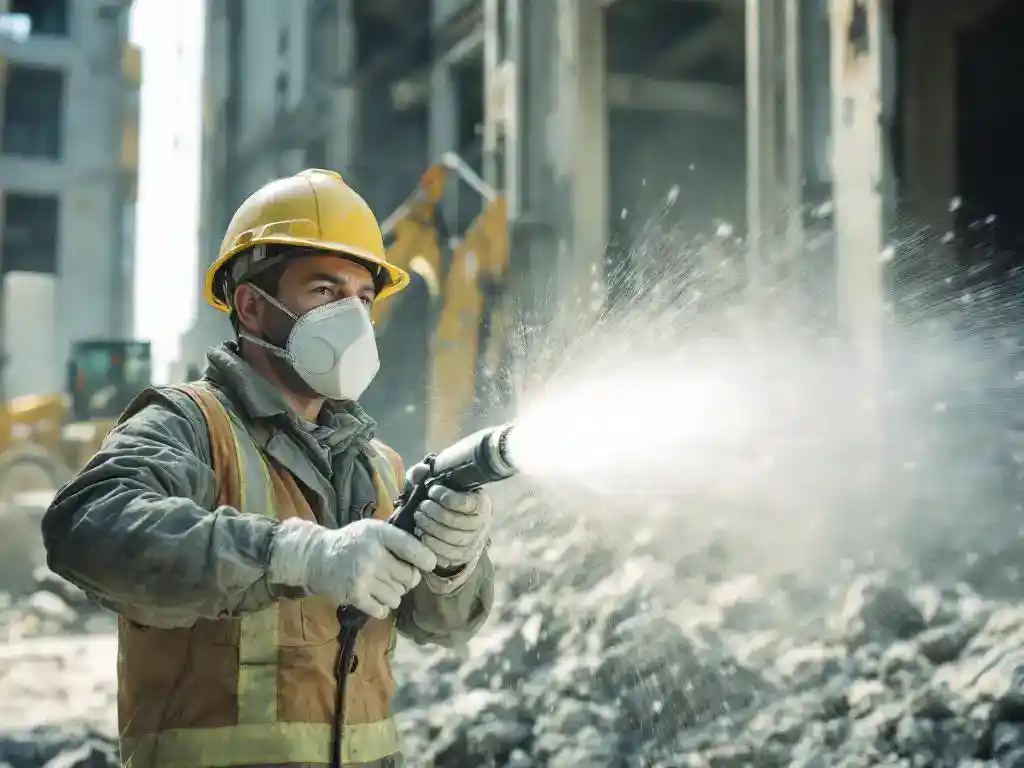
Furthermore, staff safety is a key consideration. Products free from hazardous chemicals do not require any special protective measures during use and reduce the risk of skin irritation, inhalation of harmful substances or chemical burns. For this reason, an increasing number of mining companies are consciously opting for biodegradable alternatives.
How long does a dust suppressant remain effective when stored outdoors in the mining industry?
The duration of effectiveness of a dust suppressant in outdoor storage varies from a few days to several months, depending on the type of suppressant, the weather conditions and the nature of the material. Crust formers offer the longest-lasting performance: under dry conditions, an applied layer can remain effective for weeks to months.
Heavy rainfall is the greatest threat to the service life. Rain can weaken or partially wash away a crust layer, after which re-treatment is required. Some crust-forming agents are formulated to withstand rain after curing, but even these have their limits. High wind speeds and mechanical stress – for example, from vehicles driving over the stockpile – also shorten the service life.
For long-term outdoor storage in the mining sector, it is advisable to include the operational lifespan in the maintenance plan. Periodic re-treatment is generally more efficient than waiting until dust nuisance becomes visible again. Measurements and inspections indicate when the protection is diminishing, so that the timing of re-treatment can be determined on the basis of data rather than a fixed schedule.
When is a test using one’s own materials necessary for selecting a dust binder?
A test using your own material is necessary if the material has specific properties that influence the performance of a dust suppressant, such as an unusual moisture content, a fine grain size, chemical composition or a combination of material streams. Standard recommendations are a good starting point, but offer no guarantee for the specific situation on site.
In the mining industry, materials are rarely identical. Ore from different strata or regions can vary significantly in grain size distribution and surface chemistry. A binder that performs excellently on one type of iron ore may fail to provide sufficient adhesion on another type. Only a test using the actual material can reveal this before any investment is made in a plant.
Furthermore, a laboratory test offers the opportunity to optimise the dosage. Too little binder results in insufficient dust suppression; too much increases costs without providing any additional benefit. A controlled test yields the correct ratio for the specific application. If there is any doubt about the suitability of a binder, a test is not a luxury but a logical first step. Optimisation remains worthwhile even after the project has started: field measurements can be used to further tailor the dosage and equipment to practical conditions.
How we help with dust control in the mining industry
We support mining companies in selecting and implementing the right dust suppression solution, from initial analysis through to ongoing supply. Our approach is always based on the specific material and the on-site situation. In practical terms, this means:
- Crust formation (EcoCrust S / Freko-Crust): for long-term outdoor storage of dry bulk goods such as ores and coal, with a reduction in dust formation of more than 90 per cent.
- Foam formation (Freko-Foam): for active dust sources such as crushers, conveyor belts and transhipment points within the mine site.
- Road dust control (RDS100+): for paved and unpaved roads on the mine site, where the road surface remains damp for prolonged periods due to hygroscopic effects.
- Laboratory tests using our own materials: via our in-house laboratory, we test the binder on the specific material before scaling up.
- All products are biodegradable and safe for people, soil and groundwater, and contain no hazardous chemicals.
Looking for an effective solution for industrial dust control? We’d be happy to help you find a suitable approach. Take a look at our dust control solutions or get in touch for personalised advice.
Related Articles
- Which dust control technique works better in mining: atomisation or binders?
- How do you assess whether dust control at a mining site is still relevant?
- How do you integrate substance control into an existing safety plan?
- What effect does particulate matter have on your body?
- What environmental standards will apply to dust emissions in industry in 2026?