Dust control at transhipment points in a seaport is achieved through a combination of techniques that suppress dust formation at the moment dry bulk is being loaded, unloaded or transhipped. Examples include misting systems that create a mist curtain around the dust source, foam-forming additives that bind dust particles at source, and crust formation on stockpiles that prevent wind-blown dust. Which method is most effective depends on the material, the weather conditions and the specific transhipment situation. This article answers the most frequently asked questions about dust control in port environments, ranging from the causes to the legislation and the practical choice of the right approach.
Why is there so much dust at transhipment points in a seaport?
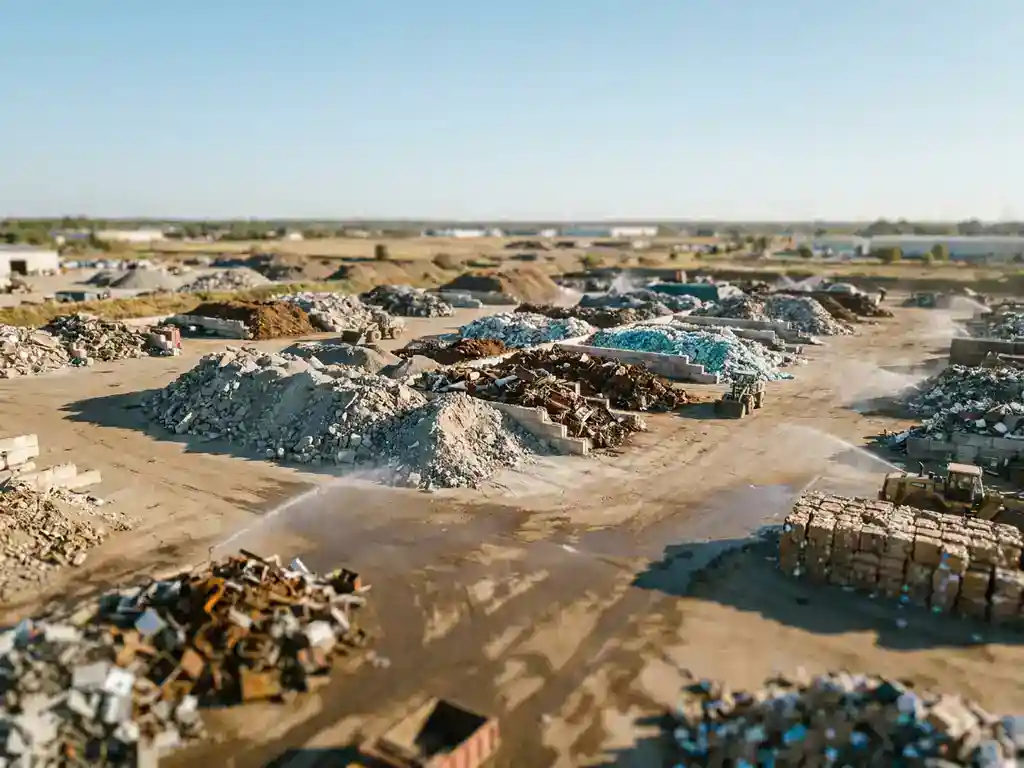
At transhipment points in a seaport, dust is released because dry bulk materials such as ores, coal, biomass or grains are moved using significant mechanical forces. Unloading a bulk carrier, dumping material onto a conveyor belt or loading a lorry generates a dust cloud at every transfer point. The combination of dry material, high drop speeds and open spaces makes transhipment points one of the largest sources of dust in industrial environments.
There are also two additional contributing factors. Firstly, the material in ports is often already dried out due to sea transport, resulting in a low moisture content and dust particles that detach easily. Secondly, the open nature of ports and the presence of wind ensure that dust clouds spread rapidly, both across the site and into the surrounding area.
Specific sources of substances at a port terminal include:
- Loading booms and grabs for unloading bulk carriers
- Dumping points on conveyor belts and in storage silos
- Stockpiles that are being built up or reduced
- Loading lorries and railway wagons
- Wind-blown debris from open storage areas
What health and environmental risks does dust pollution in a port entail?
Dust pollution in a seaport poses serious health risks to employees and environmental risks to the immediate surroundings. Fine particulate matter, also known as PM10 and PM2.5, penetrates deep into the respiratory tract and, with prolonged exposure, can lead to chronic lung conditions. Coarse dust irritates the eyes, nose and throat and reduces visibility on the work floor, which also poses safety risks.
In terms of the surrounding environment, dust fallout on nearby homes, nature and water bodies causes nuisance and, in some cases, introduces harmful substances into the soil or water. With materials such as coal, fly ash or certain ores, the issue is not merely one of nuisance, but of actual contamination.
For businesses, this means:
- Complaints from local residents and negative publicity
- Increased absenteeism due to illness and greater employer liability
- Risk of enforcement action and fines from regulatory authorities
- Reputational damage amongst clients who set sustainability requirements
What methods are used for dust control at transhipment points?
Four main methods are used for dust control at transhipment points in ports: atomisation, foaming, crust formation and the covering or encapsulation of dust sources. Each method works in a different way and is suitable for specific situations. In practice, methods are often combined to achieve the best possible result.
Misting
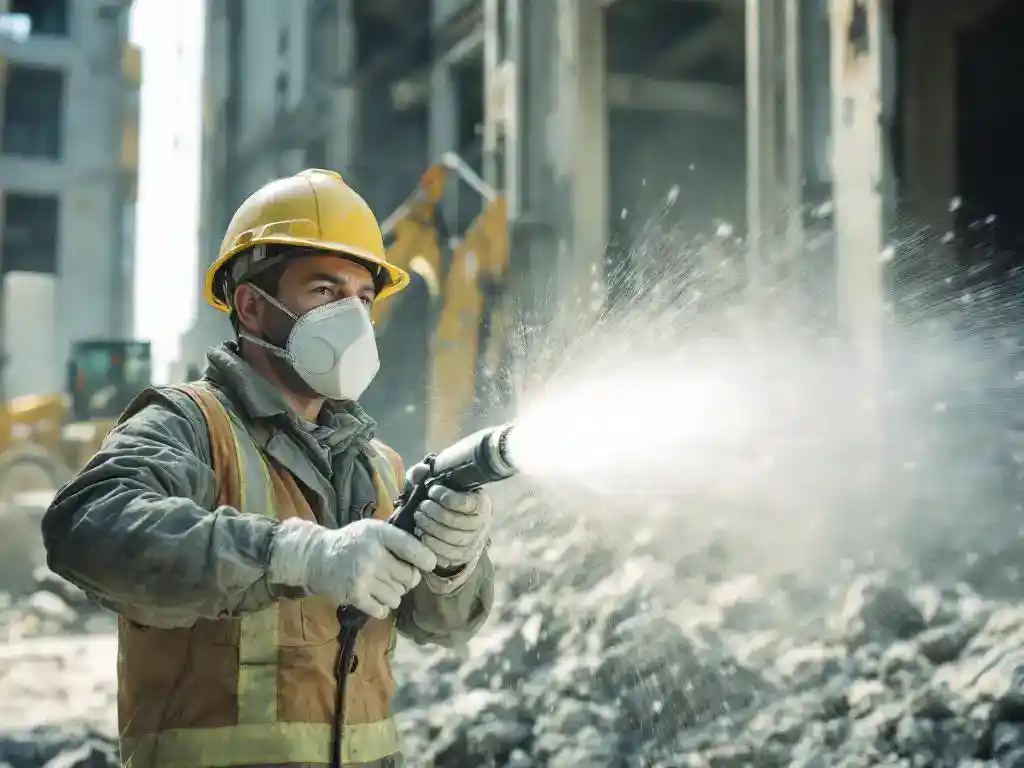
Mist systems create a curtain of extremely fine water droplets around the dust source. The droplets bind to dust particles in the air, after which they fall to the ground together. This is effective at unloading points, tipping points and conveyor belts. By adding an additive such as Freko-Humidifier, the surface tension of the water is reduced, allowing the droplets to adhere more effectively to dust particles. This makes atomisation up to ten times more effective than water alone.
Foam formation
Foam-forming additives are applied to the material under high pressure via spray bars and nozzles, directly at the source of the dust. The foam envelops the dust particles and prevents them from being released into the air. This method works well on sorting lines, crushers and dumping points where the material is in motion. Biodegradable foaming agents are also safe for the aquatic environment, which is a significant advantage in port areas near open water.
Crusting
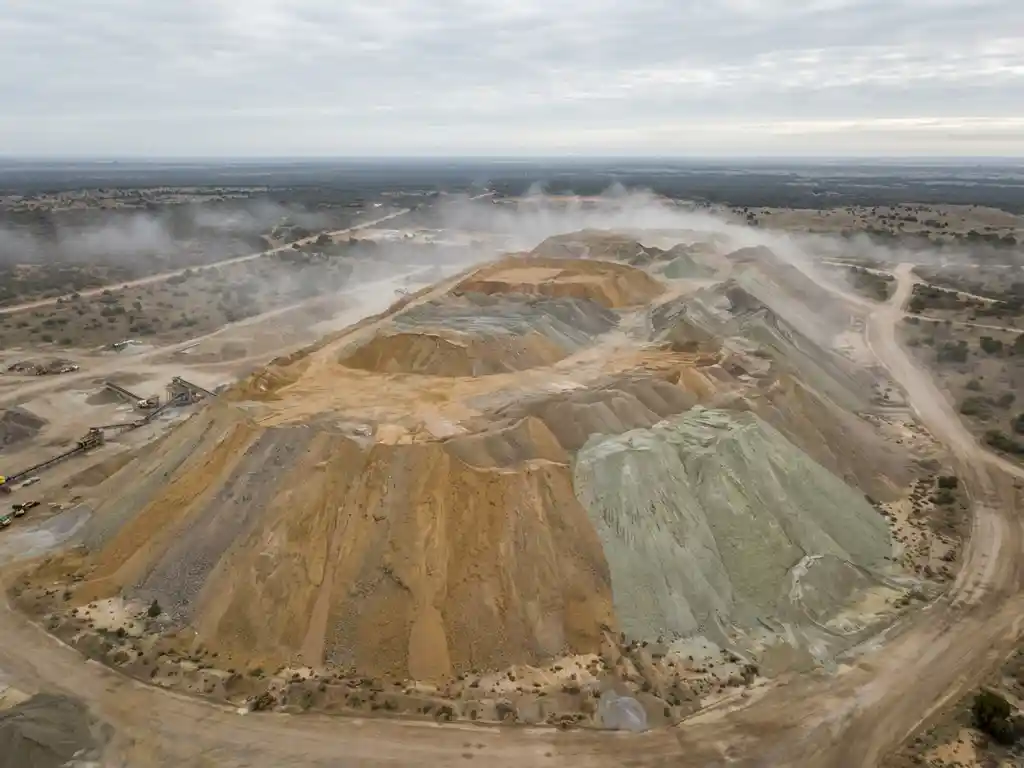
Crust formation is the recommended method for stockpiles and storage areas. A water-based crust-forming agent is applied to the surface of the material, where it forms a protective layer that prevents wind-blown dust. Products based on natural fibres and additives can reduce dust formation at stockpiles by more than 90 per cent. This is a passive measure that requires no continuous energy supply or operation.
How do dust suppression additives work when dry bulk material is being transferred?
Dust control additives work by strengthening the binding force between dust particles or by reducing the surface tension of water, so that less water is needed to achieve the same dust-suppressing effect. In the case of dry bulk in ports, additives are added to the spray or misting water, or applied directly to the material via automated systems.
The advantage of additives over plain water is twofold. Firstly, they are more effective: additives ensure that water adheres better to fine dust particles that would otherwise be missed by ordinary water droplets. Secondly, water consumption is lower, which both saves costs and contributes to a smaller ecological footprint.
Another type of additive acts hygroscopically: it attracts moisture from the air and keeps the material’s surface damp for longer. This is valuable in areas where continuous spraying is impractical, such as in large storage fields or during periods of high temperatures.
For an overview of available techniques, see our dust control solutions by application.
What does the law say about dust emissions from transhipment activities in Dutch ports?
In the Netherlands, transhipment activities in ports are governed by the Environmental Management Act and the associated emission guidelines. Companies are obliged to limit dust emissions to the levels specified in their environmental permit. The Environmental Service or the competent authority monitors compliance and may take enforcement action in the event of non-compliance, including the imposition of penalty payments or the suspension of activities.
From 2026 onwards, the requirements will be further tightened by the implementation of European directives on air quality and industrial emissions. This means that companies still using traditional methods, such as simple water sprinklers, will increasingly find themselves pushing the boundaries of what is legally permitted.
Specifically for ports, agreements also apply within the framework of port authorities such as the Port of Rotterdam Authority, which enforce their own environmental regulations for terminals operating on their premises. These regulations may be stricter than the statutory minimum standards.
Companies across various industrial sectors are increasingly being asked to demonstrate compliance with dust emission standards, including by clients and shippers who have their own sustainability targets.
How do you choose the right dust control method for your bulk materials?
The correct dust control method for a tipping point depends on four factors: the type of material, its moisture sensitivity, the nature of the dust source and the site conditions. There is no universal solution, but a targeted choice can be made based on these factors.
| Situation | Recommended method |
|---|---|
| Wind-blown stockpiles | Crusting |
| Dust at discharge points and conveyor belts | Foaming or atomisation |
| Loading and unloading of bulk carriers | Atomisation with additive |
| Large open storage areas | Crust formation or hygroscopic additives |
| Material that must not get wet | Dry crust formation or encapsulation |
Materials such as coal, biomass and ores react differently to water and additives. Some materials degrade if too much moisture is added, whilst others require only a minimal amount of moisture to suppress dust formation. A laboratory test using the client’s own material is therefore the most reliable way to determine which approach works, before investing in a system.
In addition, the scale of the operation plays a role. A small terminal with limited throughput has different requirements to a large-scale terminal that processes thousands of tonnes daily. An automated system is generally more cost-effective for larger operations, whilst smaller sites benefit from flexible, mobile systems.
How we help with dust control at transhipment points
We support companies in ports and dry bulk transhipment with an approach that begins with understanding the specific dust problem. Every transhipped material and every location is different, and this requires a bespoke solution rather than a standard product.
What we offer:
- Lab testing with our own materials: before anything is installed, we test the materials in our own laboratory to determine the most effective approach
- Bespoke installations: from misting systems to foam systems and crust formers, fully tailored to the location and the material
- Biodegradable additives: all products are safe for people and the environment, containing no hazardous chemicals
- Ongoing supply and support: pest control as a service, including advice, installation and continuous supply of additives
- Start small, scale up big: an on-site trial is possible without significant upfront investment
Would you like to know how we can help you achieve a dust-free transition? Read more about our approach or contact us directly for a no-obligation consultation.
Related Articles
- How does dust control in the steel industry differ from that in other heavy industries?
- Why is dust control for dry bulk different from that for other materials?
- What should a company measure and report regarding dust emissions?
- What effect does particulate matter have on your body?
- What are the six best methods for dust control in 2026?