When it comes to dust control at mining storage sites, there are six key considerations: the nature of the stored material, the health risks posed by particulate matter, the applicable laws and regulations, the choice of the correct control technique, the use of biodegradable additives, and the need for a site test. Each of these points has a direct impact on the effectiveness of the approach, safety in the workplace and the continuity of business operations. The questions below address each point individually, so that organisations can make the right choices in a targeted manner.
Which materials cause the most dust nuisance at mining storage sites?
At mining storage sites , fine-grained, dry and light materials cause the most dust nuisance. Examples include coal, ores, limestone powder, fly ash and fine mining sand. When exposed to wind, during transhipment or mechanical processing, these materials rapidly release particles that become airborne and disperse over long distances.
The extent of dust formation depends on three factors: the particle size of the material, the moisture content and the wind speed on site. The drier and finer the material, the greater the likelihood of dust emissions. Coal and ores are particularly problematic because they produce dust both when dry and when in motion, for example when being dumped onto a stockpile or transported via a conveyor belt.
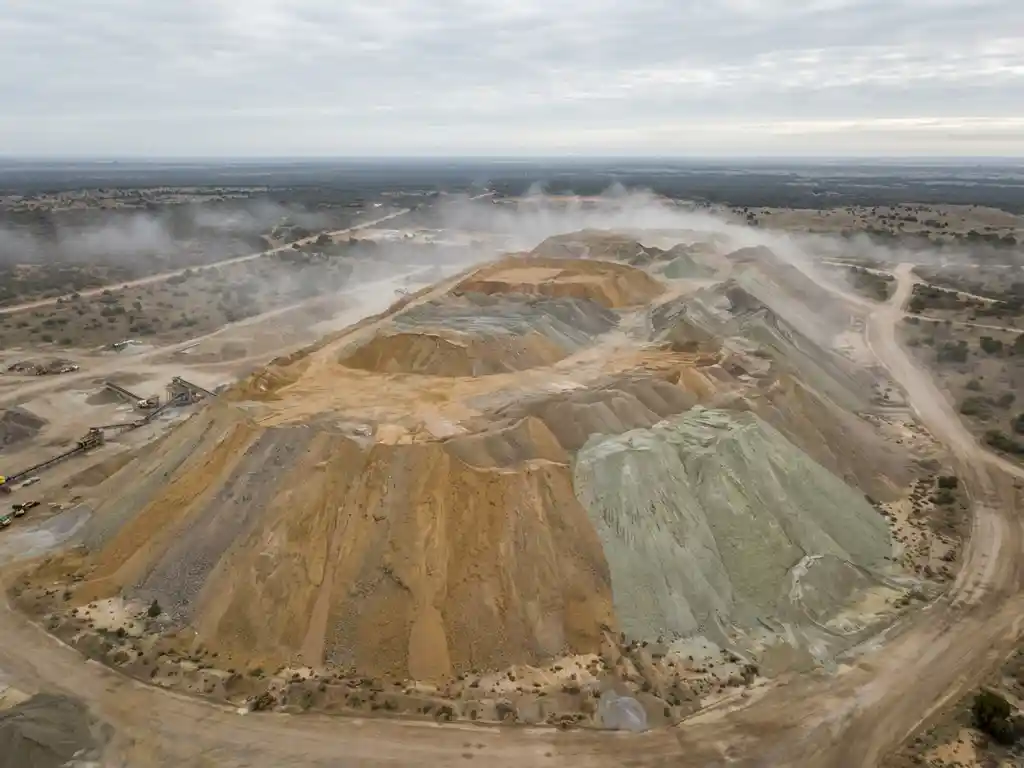
Stockpiles left outdoors for extended periods are particularly vulnerable. The top layer dries out due to wind and sun, after which even light gusts of wind are sufficient to dislodge dust particles. This makes crust formation on stockpiles a relevant measure for mining sites with long-term outdoor storage.
An effective approach begins with mapping out the dust hotspots: where does the dust originate, when does it occur, and under what conditions? Consider dumping sites, crushers, conveyor belt transfers, loading and unloading points, and the surface of stockpiles in dry and windy weather. Operators and site staff often know these locations best and can provide valuable insights into the timing and causes of dust peaks. By linking hotspots to weather conditions and process steps, it becomes clear where a measure will have the greatest impact, rather than treating the entire site in the same way.
What are the health risks posed by particulate matter at mining sites?
Particulate matter at mining sites poses a serious health risk to employees. Particles smaller than 10 micrometres (PM10) penetrate the respiratory tract; particles smaller than 2.5 micrometres (PM2.5) even reach the alveoli. Long-term exposure increases the risk of lung diseases, including silicosis from quartz-containing dust and pneumoconiosis from coal dust.
The risks are greatest when working close to the source of dust: when dumping material, operating crushers or working alongside conveyor belts. Employees who are exposed to elevated dust concentrations on a daily basis face an increased risk of chronic respiratory conditions, even if the symptoms only become apparent years later.
In addition to direct health risks, dust exposure also has indirect consequences: absenteeism, reduced productivity and liability risks for the employer. Dust nuisance can also lead to complaints from local residents and to production stoppages. Effective dust control is therefore not only a matter of compliance, but also of responsible human resources policy and the continuity of business operations.
What laws and regulations apply to dust emissions at mining sites?
Both national and European regulations apply to dust emissions at mining sites in Europe. The EU Air Quality Directive sets limit values for PM10 and PM2.5 in ambient air. In the workplace, the limit values for exposure to inhalable and respirable dust are laid down in national health and safety legislation, such as the Dutch Working Conditions Act and the associated Health and Safety Regulations.
In many countries, additional sector-specific standards apply specifically to the mining industry, particularly regarding quartz-containing dust. Furthermore, the European REACH Regulation sets requirements for the chemical substances used in dust control, which has direct implications for the choice of additives and treatment agents.
Enforcement is becoming stricter. By 2026, organisations across Europe will see an increase in inspections and higher fines for exceeding emission standards. Looking towards 2030, it is expected that requirements regarding particulate matter will be further tightened, including through stricter limit values for PM10 and PM2.5 and through ever-higher expectations regarding best available techniques (BAT) and emission limits for particulate matter. For businesses, this directly affects their licence to operate: a permit and public support can only be maintained if dust control is systematically in order and is not merely a reactive measure in response to complaints or inspections.
Companies that cannot demonstrate that they are actively managing particulate matter emissions face a growing legal and financial risk. A documented approach with measurable results is not a luxury, but a necessary foundation. This means measuring and validating: particulate matter measurements on and around the site, possibly supplemented by techniques such as LiDAR to visualise dust plumes. This data can be used to demonstrate that measures are effective and that emission standards are being met.
What is the difference between crust formation, foam formation and atomisation in dust control?
Crust formation, foaming and atomisation are three different dust control techniques, each suitable for a specific application and dust source. The main difference lies in the timing and location of the treatment.
- Crust formation focuses on trapping dust at source by forming a protective layer on the surface of a storage heap or stockpile. Products such as EcoCrust S or Freko-Crust bind the top layer of the material, preventing dust particles from being released by wind or rain. This is the recommended method for long-term outdoor storage of dry bulk materials.
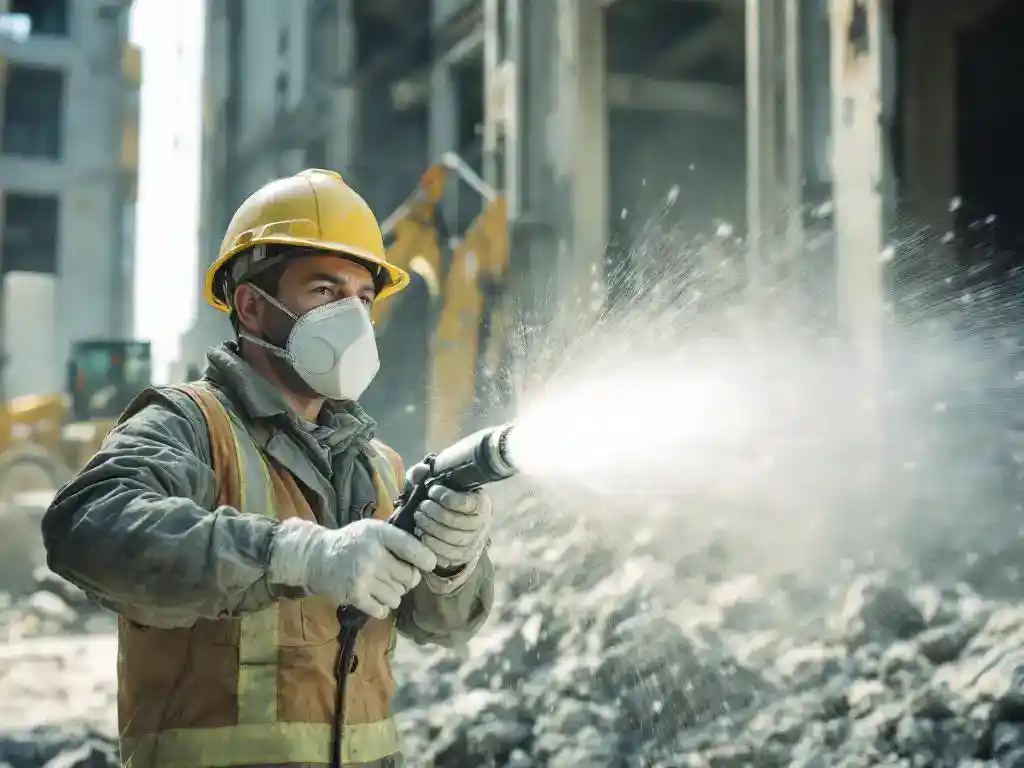
- Foam formation acts directly on the dust source itself, such as crushers, sorting lines and transhipment points. Foam is injected under pressure and envelops dust particles the moment they are released, causing them to settle before they can disperse. This makes foam particularly effective in dynamic processes involving continuous dust generation.
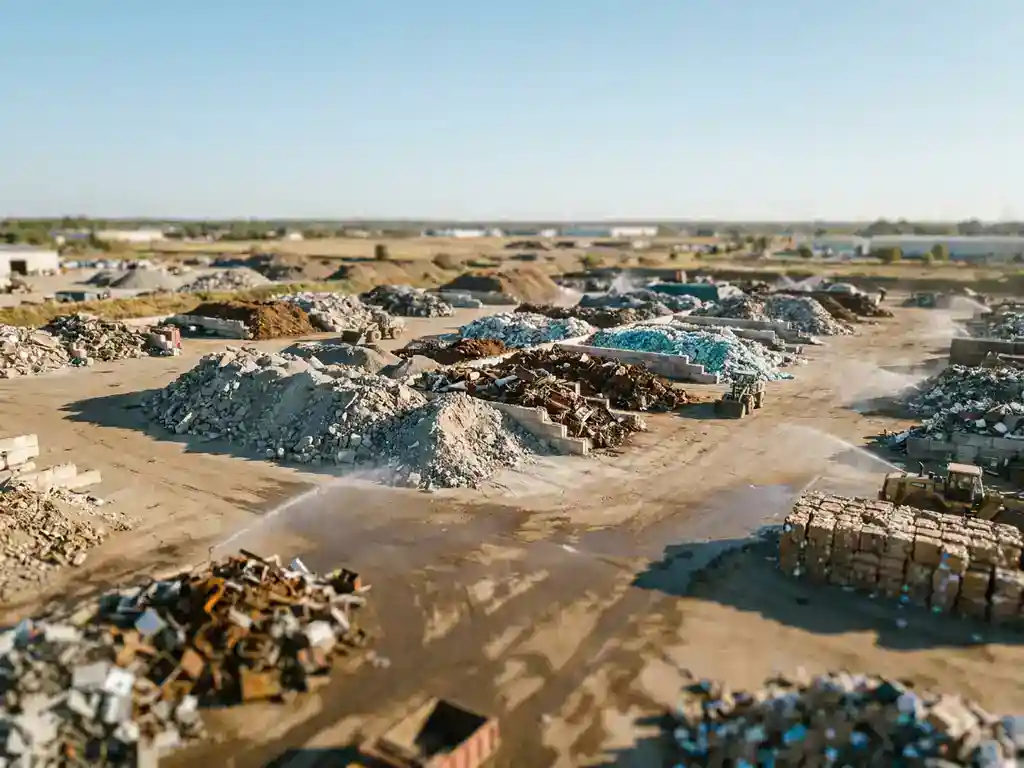
- Atomisation creates a mist screen around the dust source. Fine water droplets trap airborne dust particles and cause them to settle. This is a suitable approach when loading and unloading ships or lorries, where dust spreads rapidly over a larger area.
The choice between these techniques depends on the type of material, the location and the type of dust source, local conditions and the desired level of water consumption. Therefore, a bespoke approach is often required: the correct technique, dosage and equipment vary depending on the location, material and process. In practice, the methods are also combined to provide a comprehensive approach to a site. Measurements taken after commissioning show whether the chosen approach delivers the desired result and where dosage or equipment can be further optimised.
How do biodegradable additives work in dust control at storage sites?
Biodegradable additives enhance the effectiveness of water in dust control by reducing surface tension, enabling water droplets to come into better contact with dust particles and bind them more effectively. They are added to water which is applied to the material or dust source via sprinkler systems, atomisers or nozzles.
Effective dust control does not automatically mean using more water. It is precisely by improving dust binding that additives can contribute to more efficient water use: the same or a better result is achieved with less water. This is certainly relevant in areas where water is scarce or expensive, or where excessive wetting makes the material more difficult to handle.
At storage sites, additives are used in both crust formation and atomisation. In crust formation, they help to form a stable, cohesive layer on the surface of the stockpile. In atomisation, they increase the capture efficiency of the atomised droplets for fine dust particles. The result is lower water consumption combined with greater effectiveness.
However, additives are not a stand-alone solution, but part of a broader substance management strategy. They work best in combination with a thorough analysis of the hotspots, suitable equipment, the correct dosage and some form of monitoring. Measurement data helps to adjust the dosage and equipment as the process progresses.
A key advantage of biodegradable additives is that they leave no hazardous residues in the soil or groundwater. This makes them suitable for use outdoors, including on sites where discharge requirements or soil quality standards apply. They therefore comply with the requirements of the REACH Regulation and are safe for staff who work with the installations on a daily basis.
Would you like to know more about how additives are used? The Wuvio website provides an overview of the various applications by sector and material type.
When is an on-site dust control test required for mining storage sites?
An on-site dust control test is required when the composition of the material, local conditions or existing infrastructure influence the choice of approach. Every mining site is different: the type of ore or coal, the moisture content, the wind direction and the layout of the site all determine which method works best.
A location test is certainly advisable in the following situations:
- The material has an unknown or variable composition
- Existing methods such as water spraying do not yield satisfactory results
- There are multiple sources of substances within the same area
- The organisation wishes to demonstrate that the approach complies with emission standards
- There is uncertainty regarding the correct dosage or the type of additive
A practical approach to a test consists of four steps:
- Map out the dust hotspots: where, when and under what circumstances is dust released, partly based on operators’ experience.
- Carry out a baseline assessment, for example using particulate matter measurements or LiDAR, to establish a clear starting point.
- Test the chosen technique and dosage under real-world conditions and measure the effect again.
- Adjust the dosage and equipment based on the measurement data and only then scale up.
A trial provides concrete data on the effectiveness of the chosen approach and forms the basis for an informed investment decision. It is also a way of starting on a small scale and scaling up once the results have been proven, without making a major investment straight away. At the same time, the documented series of measurements provides evidence to licensing authorities and regulators that dust control is structurally guaranteed.
How Wuvio helps with dust control at mining storage sites
We offer a comprehensive approach to dust control on mining sites, from the initial analysis to the ongoing supply of additives. Our approach is practical and results-oriented:
- Laboratory testing with our own materials: We test the specific materials from the site in our own laboratory to determine the correct approach
- Field trial: We are conducting a trial under real-world conditions to ensure effectiveness is proven before scaling up.
- Bespoke solution: We select the appropriate combination of crust formation, foam formation or atomisation based on the material and the dust sources
- Biodegradable additives: All products are safe for humans, soil and groundwater and comply with applicable environmental legislation
- Ongoing delivery and support: We do not merely supply products, but act as a knowledge partner, contributing our expertise throughout the entire project duration
Looking for an effective solution for industrial dust control? We’d be happy to help you find a suitable approach. Take a look at our dust control solutions or get in touch for personalised advice.
Related Articles
- Which three sustainable solutions effectively tackle dust in the mining sector?
- When is source-based dust control preferable to area-based control?
- How harmful is dust in the workplace?
- What should a company measure and report regarding dust emissions?
- What environmental standards will apply to dust emissions in industry in 2026?