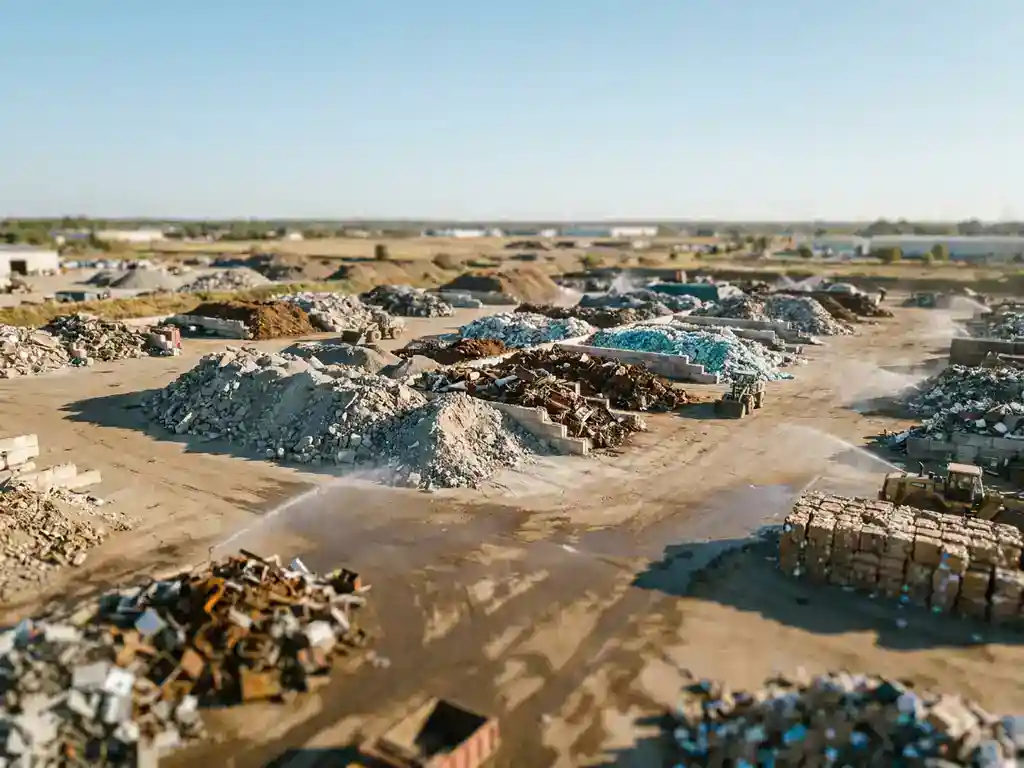
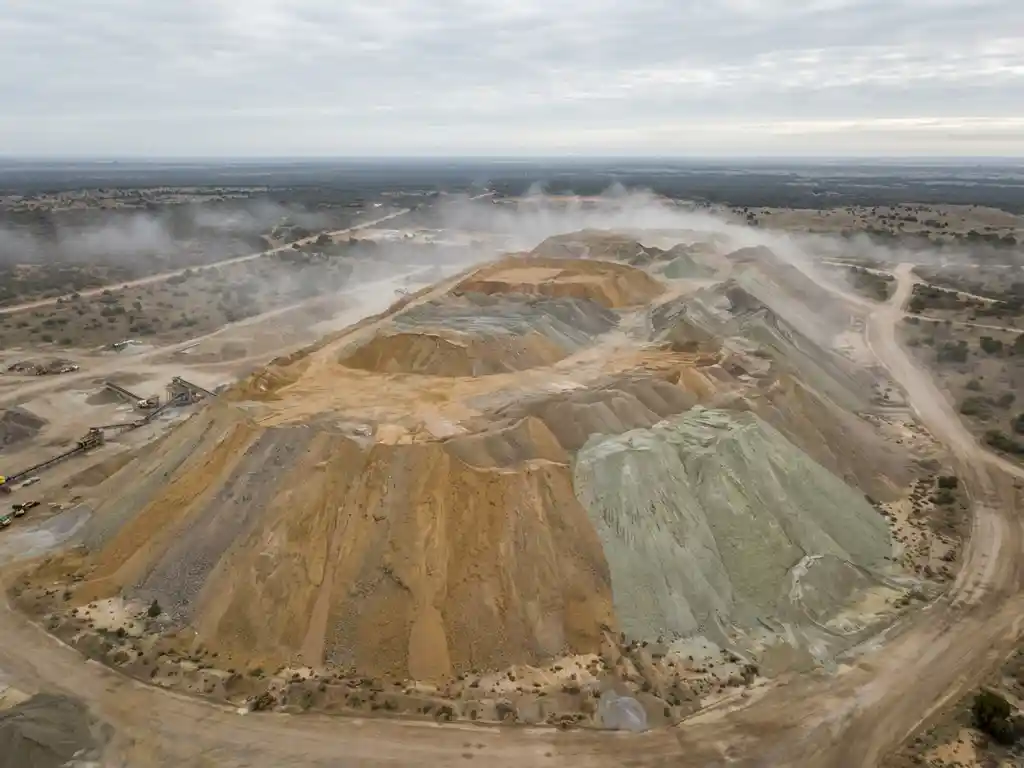
Dust control is the process of suppressing and controlling dust particles released during industrial processes. It involves various techniques, such as crust formation, foaming and atomisation, to capture dust emissions directly at source. This protects workers’ health, prevents nuisance to local residents and ensures compliance with environmental legislation. Modern dust suppression utilises biodegradable additives that reduce water consumption by 70 to 80 per cent.
Why is dust control so important for businesses?
Dust control is of great importance because it eliminates direct risks to employees, prevents environmental damage and helps to avoid legal issues. Fine dust causes respiratory complaints, irritation and long-term health problems among staff. Furthermore, dust nuisance leads to production disruptions and complaints from local residents.
The health risks posed by particulate matter are significant. Employees who are exposed to dust particles over the long term are at risk of respiratory problems, skin irritations and more serious conditions. This results in increased absenteeism and lower productivity in the workplace.
From a legal perspective, the requirements are becoming increasingly stringent. Companies must comply with strict substance emission standards and may face substantial fines for non-compliance. These fines often run into tens of thousands of euros, which has a direct impact on operating results.
Dust pollution also disrupts production processes. Dust particles can damage machinery, affect product quality and cause unnecessary maintenance shutdowns. For local residents, industrial dust emissions constitute a nuisance that can lead to complaints, reputational damage and strained relations with the local community.
What different methods are there for dust control?
There are various dust control methods, each suitable for specific situations and materials. The main techniques are crust formation, foaming, atomisation, covering and traditional water spraying. Modern methods utilise biodegradable additives that are more effective than traditional approaches.
Crust formation creates a protective layer over the material that reduces dust formation by more than 90 per cent. This method works exceptionally well for stockpiles of ores, coal and other dry bulk materials. The crust is biodegradable and can be supplied in various colours.
In foam formation, dust particles are bound by a layer of foam that is injected under high pressure via spray bars. This is ideal for dust sources such as sorting lines, crushers and conveyor belts where immediate dust suppression is required.
Atomisation creates a mist screen around the dust source. With special additives, this becomes up to ten times more effective by reducing the surface tension of water. This method is widely used when loading and unloading ships and lorries.
| Method | Scope of application | Effectiveness | Water consumption |
|---|---|---|---|
| Crusting | Stockpiles, storage | 90%+ reduction | Very low |
| Foam formation | Sorting criteria, filters | High | Low |
| Misting | Loading/unloading | High with additives | Intermediate |
| Water spraying | General | Limited | Very high |
Traditional methods, such as covering with tarpaulins or simply spraying water, have their limitations. Covering is labour-intensive and not always practical, whilst spraying water consumes large quantities of water with a limited and short-lived effect.
How do you choose the right pest control method for your situation?
The choice of the appropriate dust control method depends on the type of material, the location, the weather conditions and the budget. Dry bulk materials such as ores require a different approach to recycled materials or biomass. Specific industrial processes and local conditions also determine which method is most effective.
Start by analysing your dust problem. Where exactly does the dust originate? Is it during storage, transport, loading or unloading? Different processes require different solutions. For static storage, crust formation works extremely well, whilst dynamic processes such as conveyor belts are better served by foam formation.
The type of material is crucial to the choice of method. Fine materials such as cement or ash require more intensive dust control than coarser materials such as gravel. The moisture content of the material also plays a role: dry materials generate more dust than damp ones.
Weather conditions have a significant impact on effectiveness. Wind disperses dust more quickly and requires more powerful dust suppression. Seasonal influences also play a role in various industrial sectors: dry summers require more intensive dust control than damp periods.
Budget and payback period are practical considerations. Although modern dust control methods require an investment, they pay for themselves through lower water costs, fewer fines and higher productivity. Calculate the total costs, including labour savings and avoided damage to reputation.
Practical selection criteria
- Material type: fine vs. coarse, dry vs. damp
- Process type: static (storage) vs. dynamic (transport)
- Location: indoors vs. outdoors, exposure to wind
- Frequency: ongoing vs. periodic dust problem
- Regulatory framework: local emission requirements and standards
What are the costs of industrial dust control?
The costs of industrial dust control vary greatly depending on the method and situation, but modern solutions pay for themselves through savings on water, fines and production disruptions. Investments start at a few thousand euros for smaller installations and can run into tens of thousands of euros for complete systems. Ongoing costs consist of additives and maintenance.
The initial investment depends on the complexity of your dust problem. Simple misting systems cost less than complete, automated installations incorporating multiple dust control methods. Factors to consider include the costs of equipment, installation and any modifications to existing processes.
Ongoing costs include biodegradable additives, electricity consumption and periodic maintenance. These costs are often lower than with traditional methods, as modern additives reduce water consumption by 70 to 80 per cent, which is immediately noticeable on the water bill.
Cost savings arise on several fronts. Reduced fines for dust emissions can save thousands of euros per year. Lower absenteeism due to improved air quality boosts productivity. Damage to the company’s reputation caused by complaints from local residents is also prevented.
The payback period is usually between 1 and 3 years, depending on the situation. Companies with frequent dust problems or strict environmental requirements see a return on investment more quickly. Calculate not only the direct costs, but also indirect benefits such as higher staff satisfaction and better relations with local residents.
How Wuvio helps with dust control
We offer a comprehensive, hassle-free service in the field of industrial dust control, from analysis and laboratory tests to installation and the ongoing supply of biodegradable additives. Our team develops bespoke solutions tailored to your specific materials and processes, with 24/7 support and a proven track record across various industrial sectors.
Our approach always begins with a thorough analysis of your dust problem. In our own laboratory, we test your material to determine the most effective dust control method. This ensures you are investing in a solution that actually works for your specific situation.
Our advantages:
- Biodegradable additives that are 100% safe for people and the environment
- 70–80 per cent less water consumption than traditional methods
- In-house laboratory for material-specific testing
- 24/7 support and technical expertise
- Complete installation and ongoing supply of additives
- Proven results in ports, the steel industry, mining and recycling
Whether you’re dealing with dust nuisance from bulk transhipment, problems in the recycling industry or emissions from power stations: we’ll work with you as a knowledge partner. You can start small with a trial and scale up once the results have been proven.
Would you like to know which dust control method best suits your situation? Read more about our expertise or contact us directly for a no-obligation analysis of your dust problem.
Related Articles
- Which five materials cause the most dust nuisance in windy conditions?
- What are the three most underestimated sources of dust nuisance in a seaport?
- What are the minimum requirements for dust control in infrastructure projects?
- How do you know if your dust control measures meet current standards?
- What measuring equipment do you use to monitor dust?