Dust control is a legal requirement in the Netherlands for companies that generate dust emissions which could harm the health of employees or the environment. This obligation stems from several laws and regulations, including the Working Conditions Act, the Environmental Management Activities Decree and the Environment Act. The exact standards that apply depend on the sector, the type of dust and the location of the activities. This article answers the most frequently asked questions about dust legislation in the Netherlands in 2026.
What laws and standards apply to dust emissions in the Netherlands?
In the Netherlands, dust emissions are regulated through three main frameworks: the Working Conditions Act (Arbowet) for the workplace, the Environment Act for emissions into the open air, and the Environmental Management Act, including the Activities Decree for establishments holding an environmental permit. Together, these laws determine what a company must do to control dust emissions.
Under the Working Conditions Act, the limit values for exposure to dust are laid down in the Working Conditions Regulations. These set out statutory limit values (SLVs) for specific substances such as quartz dust (respirable crystalline silica), wood dust and flour dust. For non-specifically inhalable dust, the limit value is 10 mg/m³; for respirable dust, it is 3 mg/m³.
Emissions into the open air are subject to the standards set out in the Air Quality Act and the associated European directives. The Dutch Air Emissions Directive (NeR) has now been incorporated into the Environment Act, but the substantive standards have largely been retained. Companies holding an environmental permit are bound by the emission requirements laid down therein.
In which sectors is dust control a legal requirement?
Dust control is a legal requirement for any sector where dust emissions pose a risk to the health of employees or the environment. In practice, this applies to virtually all industrial sectors, but the strictest requirements apply to specific industries with high dust levels.
The sectors with the most stringent legal obligations include:
- Mining and quarrying — due to exposure to quartz dust and particulate matter
- Dry bulk transhipment and ports — involving the loading and unloading of coal, ores and raw materials
- Recycling and waste processing — due to dust generation at crushers, sorting lines and shredders
- Steel industry — due to metal dust and combustion residues
- Power stations and biomass processing — in the storage and transport of fuel
- Construction and infrastructure — involving demolition, earthworks and the processing of stony materials
- Agricultural sector — in the processing of cereals, animal feed and fertilisers
For all these sectors, industrial dust control varies in approach and legal requirements from sector to sector. Companies are obliged to carry out a risk inventory and evaluation (RI&E) and to implement measures based on this.
What changes will be made to the Substances Act in 2026?
In 2026, there will be two key developments that will tighten the legal requirements concerning particulate matter emissions. Firstly, the revised European Air Quality Directive (2024/2881) will come into force in stages, introducing stricter limit values for particulate matter (PM2.5 and PM10) in outdoor air. Secondly, the Environment Act strengthens the position of local authorities and environmental agencies in enforcing local emission standards.
In practical terms, this means for industrial companies:
- The limit value for PM2.5 in ambient air is being tightened within the EU from 25 to 10 µg/m³ as an annual average (with a deadline for implementation by 2030, but companies must already be planning ahead).
- Environmental services are being granted greater powers to impose bespoke regulations on businesses facing dust-related complaints from the local community
- The obligation to monitor and report dust emissions is being extended to companies holding an environmental permit
Companies that currently still meet the existing standards may need to adapt their facilities and working methods in order to comply with the stricter requirements as well.
What are the consequences of failing to comply with substance standards?
Companies that fail to comply with statutory substance standards risk administrative fines, the suspension of operations and criminal prosecution. In addition, local residents or employees may lodge claims for damages. The amount of fines varies, but in the case of serious breaches of the Working Conditions Act, fines can run into tens of thousands of euros per offence.
The implications are divided across two domains:
Implications for working conditions (Working Conditions Act)
The Dutch Labour Inspectorate (NLA) monitors companies for compliance with the Working Conditions Act. If dust exposure limit values are exceeded, the NLA may issue a compliance order, impose a fine or halt operations. Repeated breaches or serious harm to employees’ health may result in criminal prosecution.
Implications for environmental emissions (Environment Act)
Environmental authorities enforce the emission requirements set out in the environmental permit. If these are exceeded, a warning or an order subject to a penalty payment is issued first. If a company fails to rectify the situation, the permit may be revoked or operations may be suspended. Reputational damage resulting from complaints by local residents and negative publicity poses an additional risk that could affect business continuity.
How do you demonstrate that you comply with the substance standards?
Companies demonstrate compliance with dust standards through a combination of measurements, documentation and a demonstrable management system. The burden of proof lies with the company itself: without documented measures and measurement results, it is not possible to demonstrate compliance during an inspection.
The steps for demonstrable compliance are:
- Risk Inventory and Evaluation (RI&E) — identify sources of dust, exposure routes and risks
- Exposure measurements — have personal and/or stationary measurements carried out by a certified measurement agency
- Management plan — document which measures have been taken and why they are adequate
- Periodic monitoring — repeat measurements in the event of changes to the process or following complaints
- Recording and reporting — document measurement results and actions in a file that is available for inspection
Additional reporting obligations apply to emissions into the atmosphere, based on the environmental permit. Companies subject to a permit requirement must report annually to the competent environmental authority.
Which pest control methods are legally recognised as adequate measures?
The law does not prescribe specific methods, but requires companies to apply the best available techniques (BAT). This principle means that a company must demonstrably use the most effective and feasible methods to limit dust emissions. The techniques that qualify as BAT are described in the European Commission’s BREF documents and the Dutch BAT conclusions.
Methods generally recognised as adequate include, amongst others:
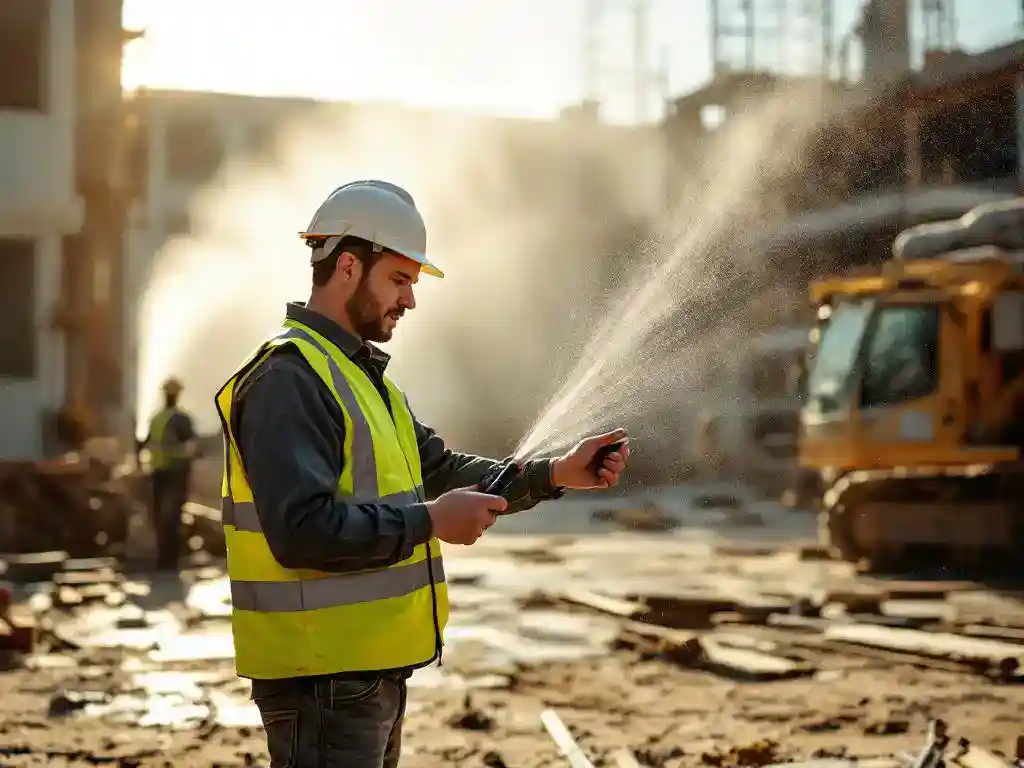
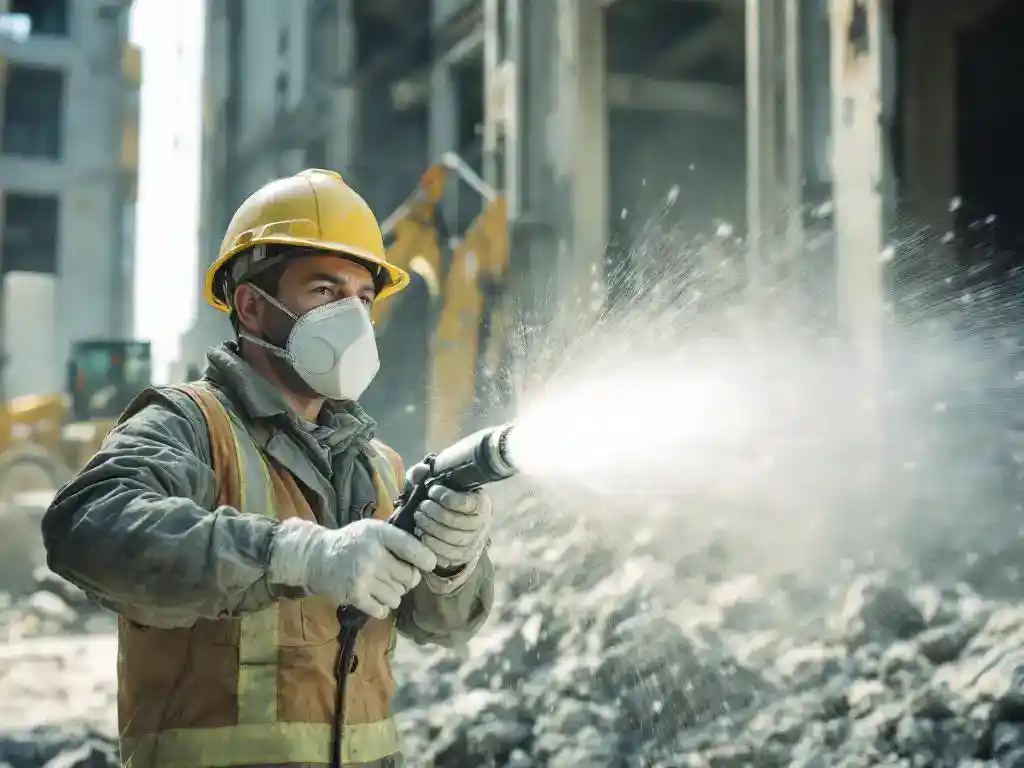
- Atomisation — creating a mist screen around the dust source to bind the dust being released
- Crust formation — applying a binding layer to stockpiles to prevent windblown material
- Extraction and filtration — extracting dust at source and filtering it through fabric filters or cyclones
- Moistening — the addition of water or additives to material to reduce dust formation
- Enclosure — the physical sealing off of dust sources such as conveyor belts and transfer points
When selecting a method, the regulator assesses its effectiveness in the specific situation. A method that is adequate in one context may be insufficient in another situation. It is therefore important to substantiate the chosen approach with measurement results and to document why this method is the best choice for the specific material and process. Further information on the pest control solutions available for each technique helps in making an informed choice.
How Wuvio helps with dust control that complies with the law
We help industrial companies to systematically control dust emissions in a way that complies with legal requirements. Our approach is practical and fully bespoke: from a laboratory test using the client’s own materials to an installation that delivers immediately measurable results.
- Analysis and lab testing — we test the specific material in our own laboratory to determine the most effective method
- Bespoke installations — from atomisation to crust formation, fully tailored to the process and the location
- Biodegradable additives — all products are 100% safe for people and the environment, with no hazardous chemicals
- Ongoing delivery and support — dust control as a service, including monitoring and adjustment
- Compliance documentation — we provide support in recording measurement results and measures for inspection and reporting
It is possible to start small: a pilot installation on-site provides insight into the results before a larger investment is made. Find out more about our approach and expertise, or contact us directly for a no-obligation consultation.