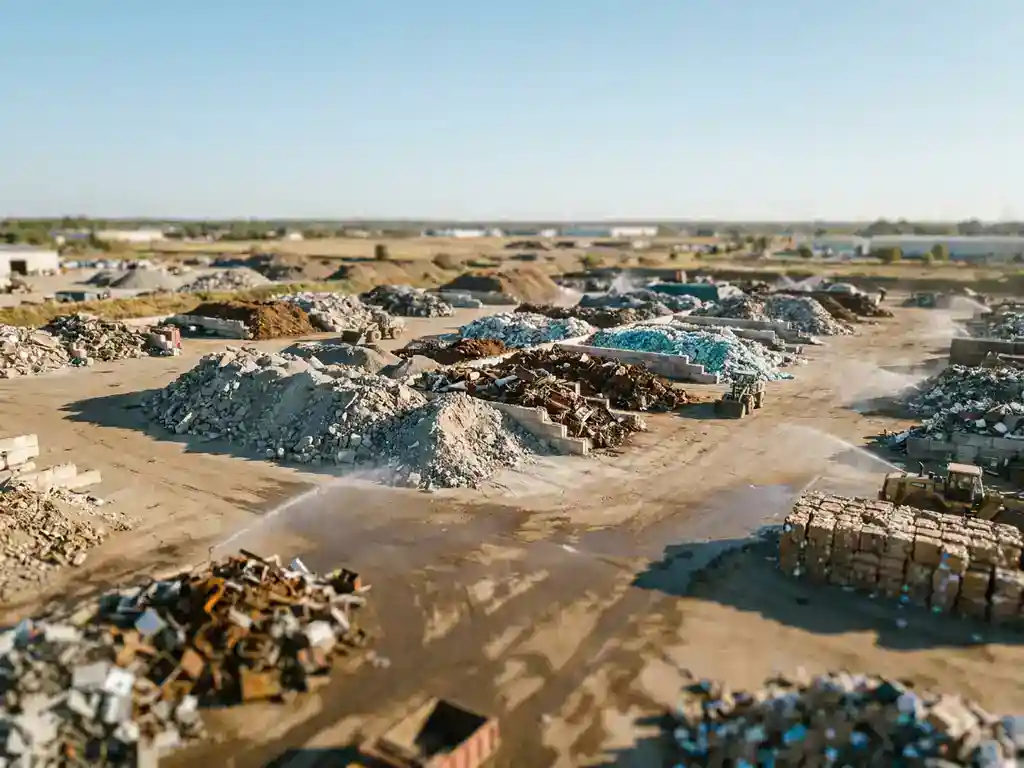
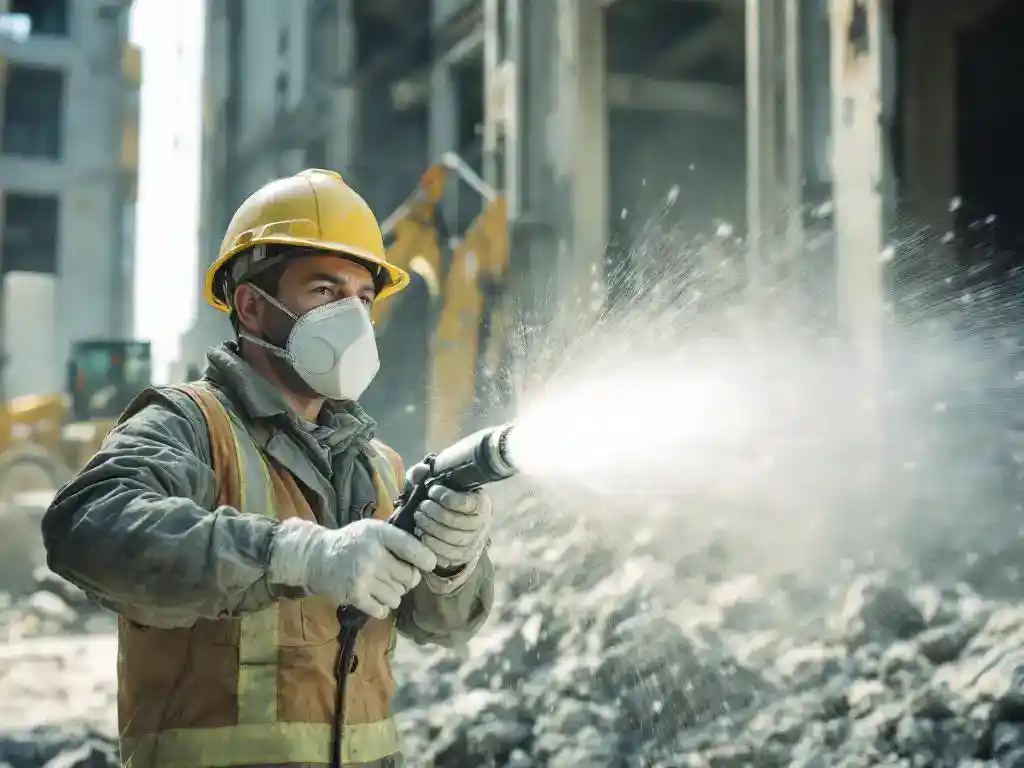
Fines for dust nuisance can range from a few hundred euros to tens of thousands of euros, depending on the severity of the offence and whether it is a repeat offence. Dutch companies must comply with the Environmental Management Act and the Environment Act, under which regulators may impose fines in response to complaints from local residents or where measurable dust concentrations exceed the permitted limit values. Effective prevention starts with understanding where, when and under what circumstances dust is generated. By implementing source control measures and validated monitoring, you can avoid costly penalties and safeguard both your compliance and your licence to operate.
What are the legal regulations regarding dust nuisance in the Netherlands?
Dutch companies must comply with the Environmental Management Act, the Environment Act and municipal by-laws regulating dust emissions. This legislation sets limit values for dust concentrations in the air and obliges companies to prevent dust nuisance by implementing source control measures.
The Environmental Management Act forms the basis for legislation on industrial dust control in the Netherlands. Companies that generate dust emissions must apply for an environmental permit setting out emission limit values. These limit values vary by industry; for example, different sectors such as mining, recycling and power stations have specific standards.
Since the introduction of the Environment Act, the rules have become stricter. Local authorities may draw up supplementary by-laws imposing even stricter requirements on dust control, particularly in residential areas. You are in breach if:
- substance concentrations exceed the permitted limit values
- visible dust dispersion occurs outside your business premises
- Local residents are experiencing nuisance from dust fallout
- you have not implemented adequate source control measures
Furthermore, take into account developments leading up to 2030. It is expected that particulate matter requirements will become even stricter, that BAT (Best Available Techniques) requirements will be applied more rigorously, and that emission limit values for particulate matter will play a greater role in licensing and enforcement. Those who invest systematically in dust control now will be better prepared for these stricter standards and will safeguard their licence to operate in the long term.
How high can fines for dust nuisance go?
Fines for dust nuisance range from €340 to €67,000, with the amount depending on the severity of the offence, whether it is a repeat offence, and the damage caused to the surrounding area. Companies may also be forced to suspend their activities until the offence has been rectified.
The fine categories are classified as follows:
| Violation | Amount of the fine | Additional restrictions |
|---|---|---|
| Slight overlap | €340 – €1.400 | Warning |
| Severe dust emissions | €1.400 – €8.700 | Penalty clause possible |
| Repeated infringement | €8.700 – €67.000 | Suspension of activities |
Factors influencing the level of the fine include the duration of the infringement, the impact on local residents and whether you have received fines previously. Companies that fail to take action following an initial warning will face more severe sanctions. The regulator may also impose an order subject to a daily penalty, under which you will be liable to pay additional sums each day until the dust problem has been resolved.
The immediate fine is often the smallest part of the damage. A suspension of operations affects your business continuity, and repeated complaints from local residents can structurally undermine the trust of the local authority and the surrounding community. This makes dust control an integral part of your broader business operations and not merely a cost item.
What factors determine whether you will be fined for dust nuisance?
Complaints from local residents, inspections by regulatory authorities and measurable dust concentrations exceeding the limit values lead to enforcement action and fines. Visible dust dispersion outside your premises is also a direct cause for sanctions, regardless of whether any official complaints have been lodged.
Regulatory authorities use various methods to determine dust pollution:
- Complaints registration: Local authorities record complaints from local residents regarding dust nuisance and dust deposition.
- Visual inspection: Inspectors assess visible dust clouds and their dispersion during site visits.
- Particulate matter measurements: Concentration measurements of PM10 and PM2.5 particles in ambient air.
- Compliance checks: Verification that companies comply with authorised emission limit values.
The likelihood of a fine increases when several factors coincide. For example: visible dust dispersion combined with complaints from local residents almost always leads to enforcement action. Companies without adequate dust control solutions are also more likely to be fined, as regulators expect you to take proactive measures.
How can you effectively prevent dust nuisance and fines?
Effective prevention begins with identifying your dust hotspots and subsequently requires a combination of source control measures, monitoring and technical solutions such as crust formation, atomisation and biodegradable additives. A good dust control plan, with continuous monitoring of emission limit values, prevents breaches before they occur.
In practice, work through these steps:
- Map out the hotspots. Determine where the dust is generated (e.g. transhipment points, stockpiles, transport routes and moving vehicles), when it is generated (time of day, season, operational phase) and under what conditions (wind direction and speed, drought, material properties, moisture content). Involve your operators: they often know the areas where things go wrong in practice better than any report could.
- Select measures on a case-by-case basis. The correct technique, dosage and equipment vary depending on the location, material and process. What works at a coal storage site does not automatically work at a recycling site. Tailor-made solutions are therefore the rule rather than the exception.
- Measure and validate the results. Use particulate matter measurements (PM10 and PM2.5) to check whether the measures are actually working. For larger sites, LiDAR can help to visualise dust plumes and assess their size and dispersion.
- Optimise on the basis of data. Use measurement data to adjust dosage, coverage and the deployment of equipment, for example by responding to weather conditions or peak periods in business operations.
Practical preventative measures include:
Source criteria:
- installation of misting systems at transhipment and transport points
- application of crust formation to stockpiles and storage sites
- use of biodegradable additives that reduce water consumption by 70–80 per cent
- covering dust-sensitive materials during transport and storage
Monitoring and compliance:
- continuous measurement of dust concentrations with automatic alarm systems
- regular calibration of measuring equipment in accordance with statutory requirements
- documentation of all substance-related activities and measures
- drawing up an up-to-date substance management plan with emergency procedures
Effective dust control does not automatically involve using more water. Extra water can even cause new problems, such as mud-related issues, higher costs and contaminated waste water. Additives can improve dust suppression and make water use more efficient, but they are not a stand-alone solution: they work best as part of a broader strategy in which source control measures, application techniques and monitoring are coordinated.
Modern dust control technologies bind dust particles directly at source, thereby preventing airborne dispersion. This leads to a significant improvement in air quality on the premises and considerably reduces the likelihood of complaints from local residents.
How we help prevent dust-related nuisance and fines
We offer a comprehensive, hassle-free service in the field of industrial dust control and compliance, ranging from analysis and laboratory tests to the ongoing supply of biodegradable additives. Our approach prevents fines for dust emissions through proactive source control measures and continuous monitoring of dust concentrations.
Our compliance support includes:
- Substance analysis and risk assessment: Identification of substance sources, hotspots and emission points at your site
- Bespoke dust control solutions: crust formation, atomisation and foam applications, tailored to your materials and processes
- Monitoring and reporting: Continuous monitoring of emission limit values with automatic alarm systems
- 24/7 support: Immediate response to dust incidents to prevent fines and shutdowns
- Legislative updates: Advice on new environmental legislation and amendments to your substance management plan
Our biodegradable additives not only reduce dust emissions by more than 90 per cent, but also significantly lower water consumption. This helps companies comply with increasingly stringent environmental standards, whilst reducing operational costs.
Would you like to know how we can solve your dust problem and help you avoid fines? Read more about our expertise or contact us directly for a no-obligation analysis of your situation.
Related Articles
- How does misting work for dust control in a port?
- What are the five ways to combat dust from port transport via conveyor belts?
- How does dust pollution spread from a site into the surrounding area?
- When will dust control become a legal requirement in the Netherlands in 2026?
- How does misting work against dust?