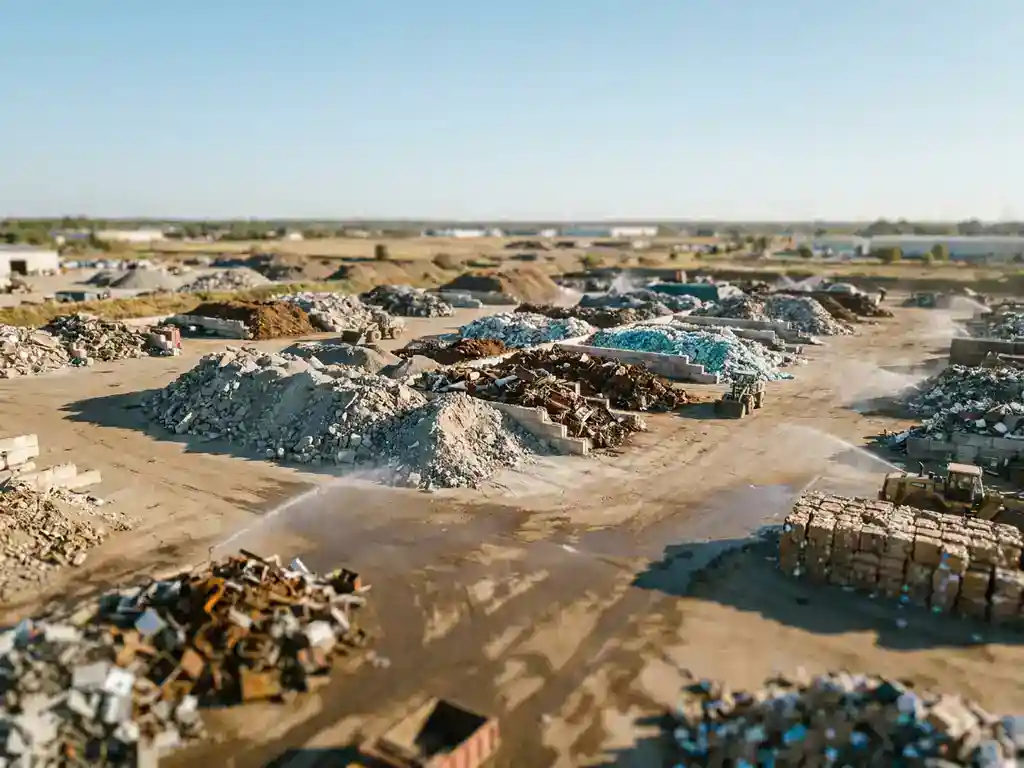
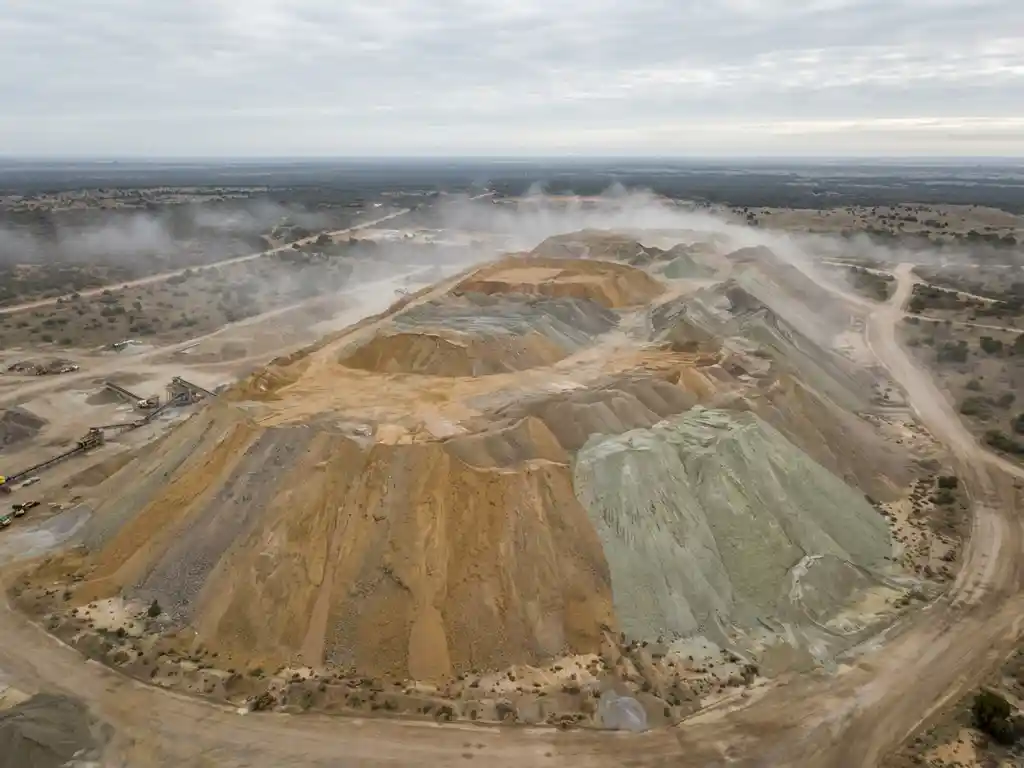
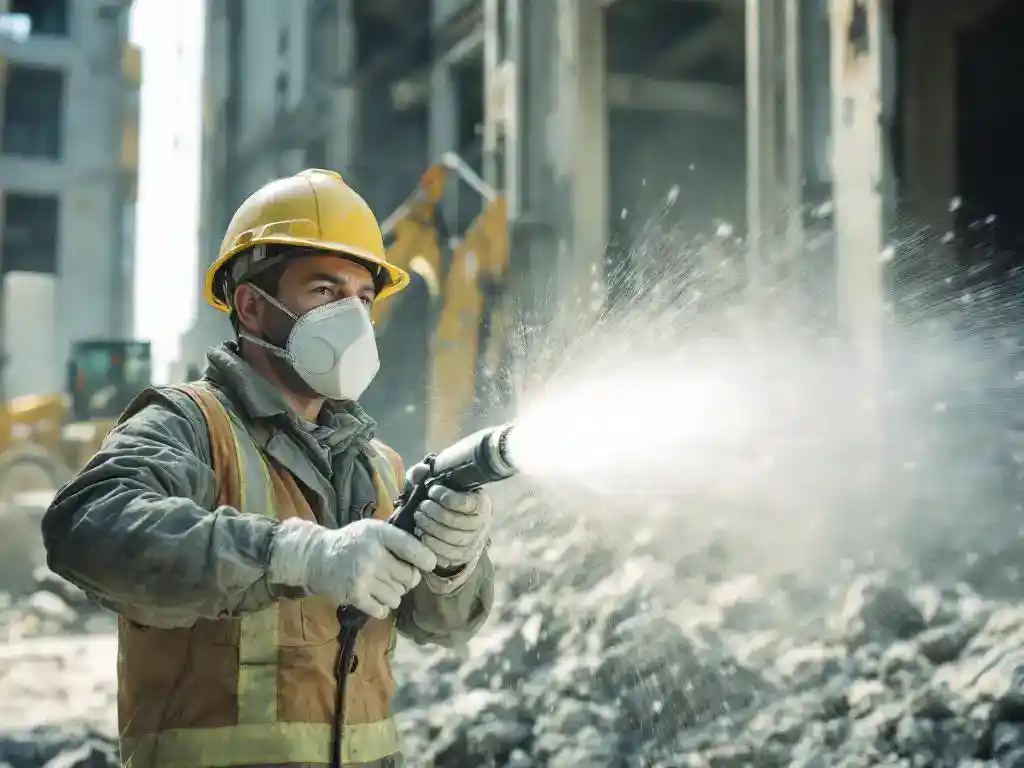
Dust pollution on construction sites arises from earthworks, material processing and the transport of building materials. Effective dust control begins with identifying the dust hotspots: where, when and under what circumstances is the dust released? Based on this, you can select the right combination of crust formation, foam applications and biodegradable additives, which are more effective than traditional methods such as water spraying. The best choice depends on your project type, the type of material and environmental factors. In this way, you protect the health of your staff, prevent complaints from local residents and ensure that construction work can continue uninterrupted.
Why does so much dust accumulate on a building site?
Construction dust is mainly caused by earthworks, the transport of materials and weather conditions such as wind and drought. Every time soil is moved, materials are loaded or transport vehicles travel on unpaved roads, dust particles are released and dispersed through the air.
The main causes of dust formation during construction activities are:
- Earthworks and excavation – Moving earth and sand creates a large number of loose particles.
- Loading and unloading of building materials such as sand, gravel and rubble.
- Transport via unpaved roads and construction tracks.
- Dry weather conditions that cause dust particles to become easily airborne.
- Wind carrying dust from storage depots and open areas.
The dust problem is rarely equally severe everywhere. It concentrates in specific locations and at specific times: the excavation site during dry periods, the loading and unloading area at a storage depot, or a haul road used by heavy traffic. It is therefore advisable to carry out a dust hotspot analysis first. Walk through the site, noting for each location which activity causes dust and under which wind direction, wind speed and dryness conditions the problem is at its worst. Involve the machine operators and site staff in this process: they know the spots where the dust is most persistent and are the first to notice when a measure is no longer effective.
Traditional methods such as water spraying often have a limited and short-lived effect. The water evaporates quickly, causing the dust problem to return. Moreover, these methods consume large quantities of water without offering a structural solution to dust emissions at source. Effective dust control therefore does not automatically mean using more water: with additives, the same amount of water binds the particles more effectively and for longer.
What health risks do building materials pose?
Building materials cause respiratory problems, eye irritation and long-term effects upon exposure. Fine particulate matter penetrates deep into the lungs and can cause permanent damage to the respiratory systems of construction workers and local residents.
The health effects of dust exposure are:
- Acute effects: coughing, sneezing, eye irritation and respiratory symptoms.
- Chronic effects: pulmonary fibrosis, silicosis and an increased risk of respiratory tract infections.
- Increased risk of cardiovascular disease due to prolonged exposure to particulate matter.
- Exacerbation of existing conditions such as asthma and COPD.
From a legal perspective, as an employer you are obliged to create a safe workplace. The Working Conditions Act sets out clear requirements for dust control on construction sites. In the event of breaches, you risk fines and liability for health problems among your staff. Local residents may also lodge complaints with the local authority, which could lead to work being halted.
Dust control is therefore also a matter of business continuity and your ‘licence to operate’: the social and regulatory scope required to be permitted to build. As we approach 2030, the requirements regarding particulate matter and air quality are expected to become stricter. Those who implement a structured approach now will be better prepared for stricter emission limits and will prevent dust-related complaints from causing delays or work stoppages later on.
What are the most effective methods for tackling dust?
The most effective dust control combines crust formation, foam applications and atomisation with biodegradable additives. These methods bind dust particles directly at the source and are far more sustainable than simply spraying water. Additives are not a stand-alone solution, but rather part of a broader dust control strategy that also takes into account layout, planning and monitoring.
| Method | Effectiveness | Advantages | Disadvantages |
|---|---|---|---|
| Water spraying | Limited | Inexpensive, quick to implement | Short-term effect, high water consumption |
| Crusting | Very high | Long-term effect, 90%+ reduction | Higher initial costs |
| Foam applications | High | Versatile, environmentally friendly | Specialist equipment required |
| Fogging with additives | High | 70–80% reduction in water consumption | Technical knowledge required |
Crust formation works by creating a protective layer over storage depots and open areas. This crust prevents dust particles from being stirred up, even in strong winds. Foam applications are ideal for dynamic situations such as loading and unloading, where the foam immediately binds dust particles whilst work is in progress.
Spraying with additives is up to ten times more effective than plain water, as the additives reduce surface tension. This allows the water droplets to adhere better to dust particles and ensures the effect lasts longer. Water consumption is reduced, whilst dust binding is improved.
Please note that the correct technique, dosage and equipment vary depending on the location, material and process. Fine sand requires a different approach to rubble, and a temporary construction track has different requirements to a long-term storage depot. A bespoke approach is therefore the rule rather than the exception.
How do you choose the right pest control solution for your project?
The right choice depends on the project type, material type, weather conditions and budget. For static situations such as storage depots, crust formation is ideal, whilst dynamic processes are better suited to foam or atomisation applications.
Follow these steps to choose the best solution:
- Map out the dust hotspots: Determine where the most dust is released, at what times and under what circumstances, and involve the operators who work on site on a daily basis.
- Determine the material type: Fine materials require a different approach to coarse materials.
- Assess the environmental factors: wind speed, humidity and temperature.
- Set priorities: health, environmental impact or cost-effectiveness.
- Test the solution: Start with a small-scale trial.
- Measure and validate the results: Verify the effect using particulate matter measurements and, based on the measurement data, optimise the dosage, frequency and equipment.
Different recommendations apply to different construction scenarios:
- Earthworks: Spraying with additives whilst excavating.
- Storage depots: Crust formation for long-term protection.
- Transport routes: Road dust control using hygroscopic additives.
- Loading/unloading: Foam applications during active operations.
Find out which dust control solutions best suit your specific situation. Specialised approaches are available for various industrial sectors, taking into account the unique challenges of each field.
How we help with dust control on construction sites
We offer a complete, hassle-free solution for dust control on construction sites using biodegradable additives and bespoke systems. Our solutions reduce water consumption by 70–80 per cent and are completely safe for people and the environment. We always begin with an analysis of your dust hotspots and tailor the technology, dosage and equipment to your site, materials and processes.
Our benefits for construction projects:
- Proven effectiveness: Over 90 per cent reduction in dust emissions at storage depots.
- Sustainable products: 100% biodegradable additives free from hazardous chemicals.
- Cost-effective: Up to 80 per cent less water consumption than traditional methods.
- Flexible application: From small-scale construction projects to major infrastructure works.
- Full service: Consultancy, delivery, installation and ongoing support.
- Rapid results: Immediate impact following the implementation of our solutions.
Start small with a trial on your construction site and experience the difference for yourself. Our experts will help you choose the best approach for your specific situation.
Would you like to know how we can solve your dust problem? Find out more about our expertise or contact us directly for a no-obligation consultation.
Related Articles
- When should you opt for crust-forming agents in mining dust control?
- Which dust control technique works better in mining: atomisation or binders?
- How do you document dust control measures for a regulatory authority?
- Dust control in dry bulk: which approach works?
- What role does dust control play in obtaining an environmental permit?